
House J in Beijing design by Atelier About Architecture
Project: House J in Beijing
Architects: Atelier About Architecture
Location: Beijing, China
Gross Area: 650 m2 | 6996 Sq. Ft.
Project Years: 2023 – 2025
Photographs: Zhu Yumeng
Architects: Atelier About Architecture
Location: Beijing, China
Gross Area: 650 m2 | 6996 Sq. Ft.
Project Years: 2023 – 2025
Photographs: Zhu Yumeng
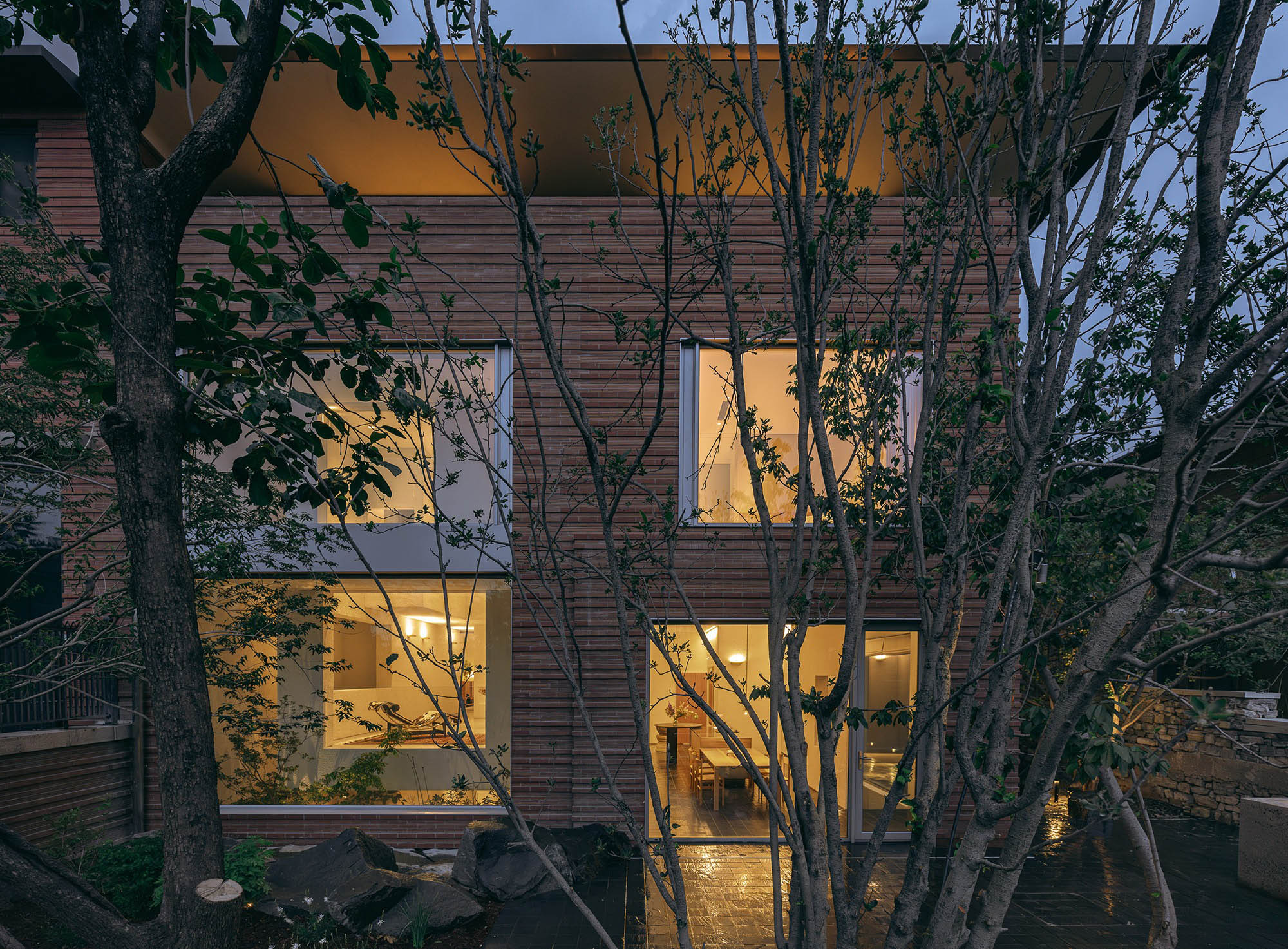
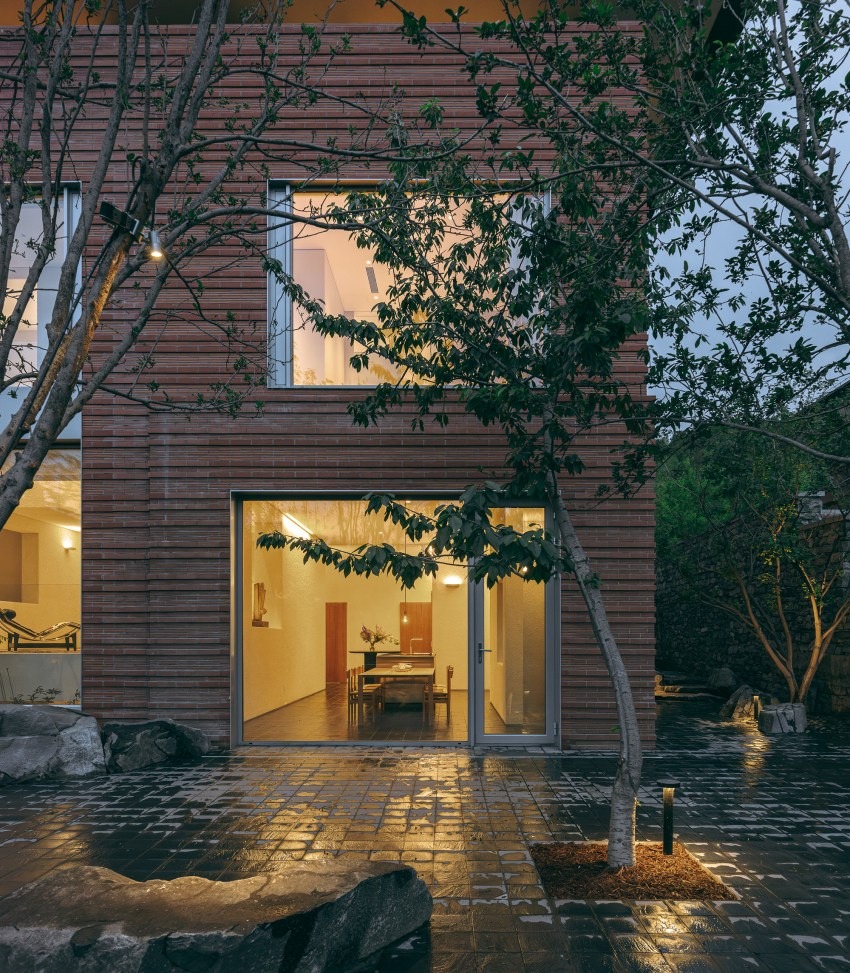
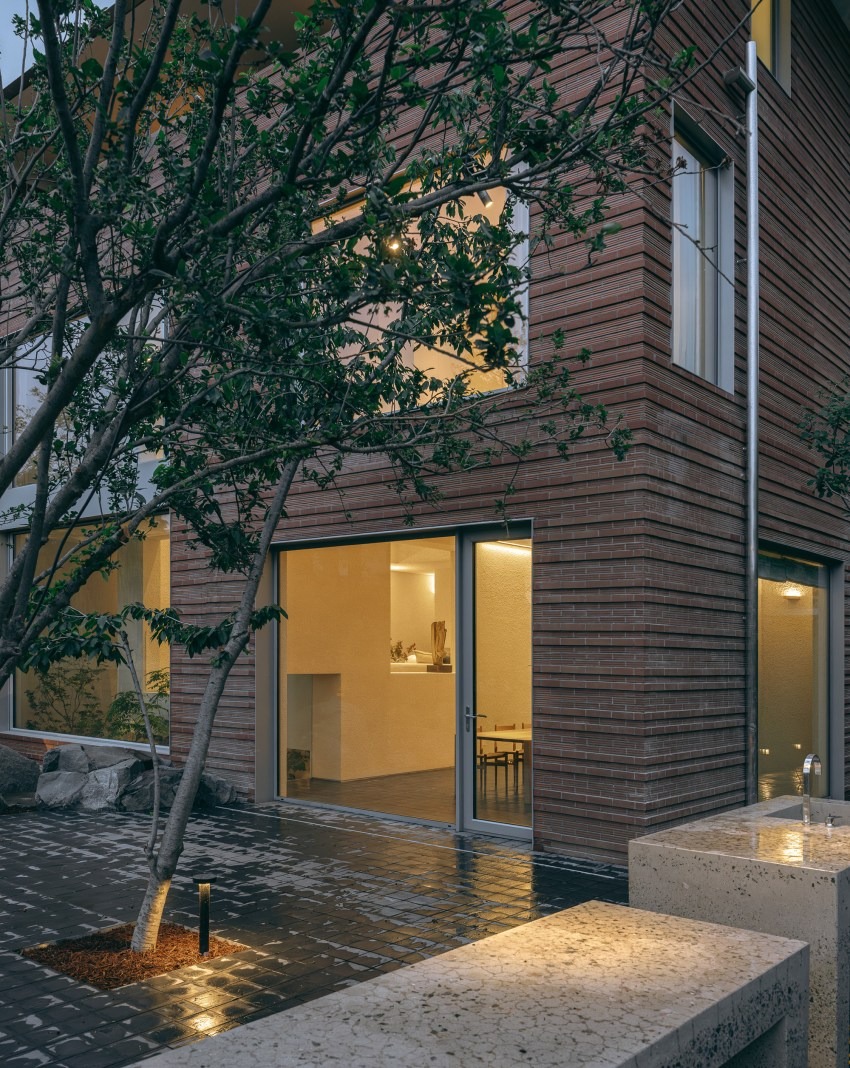
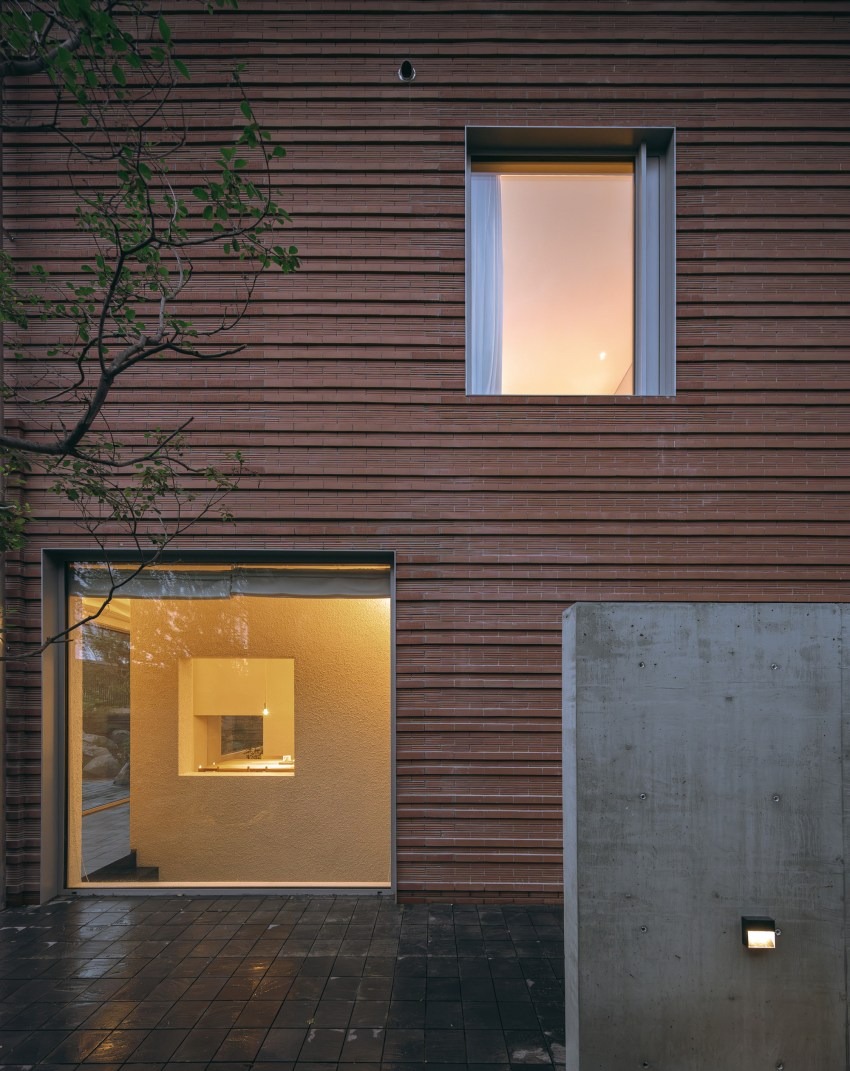
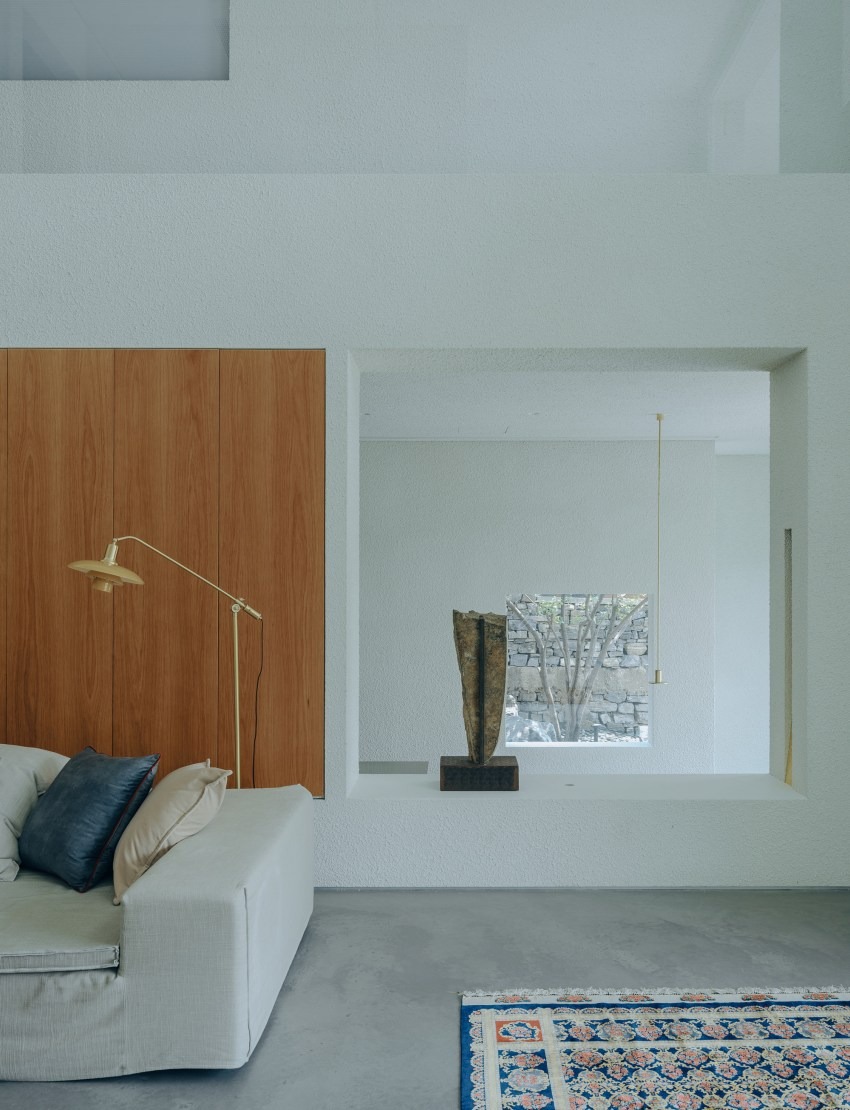
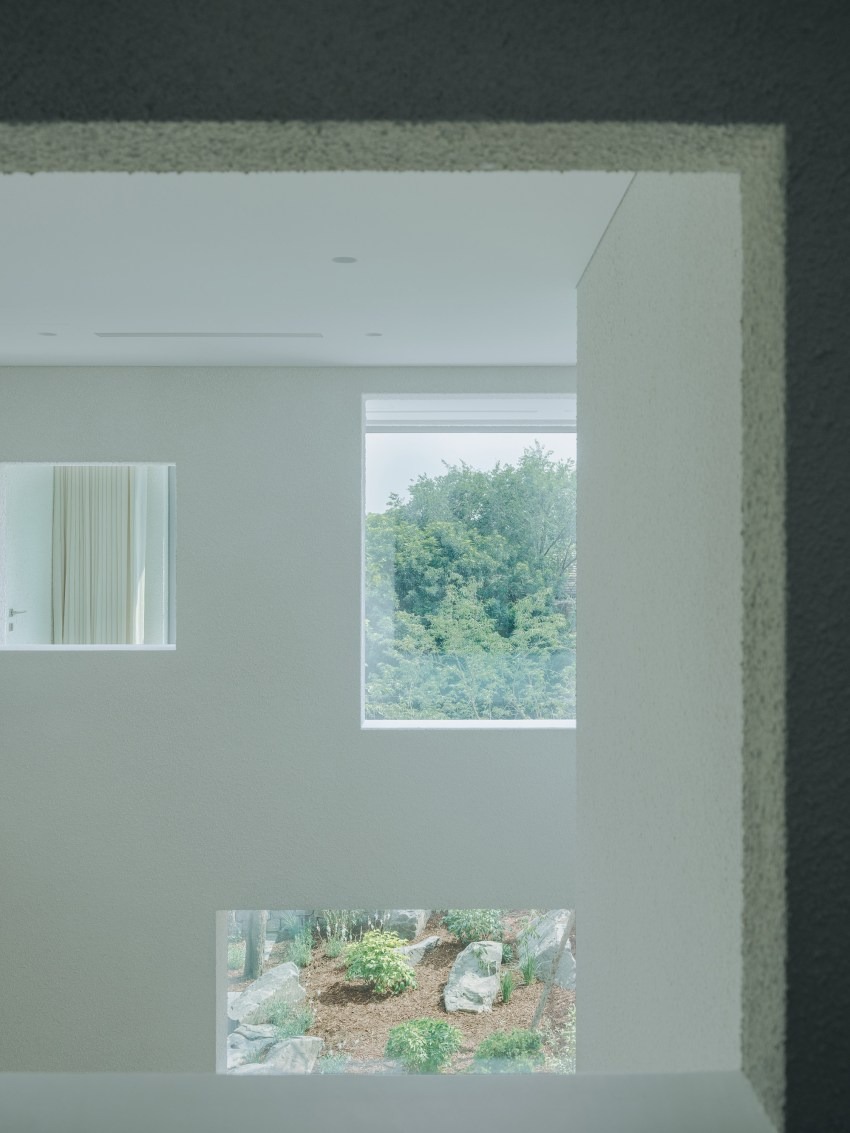
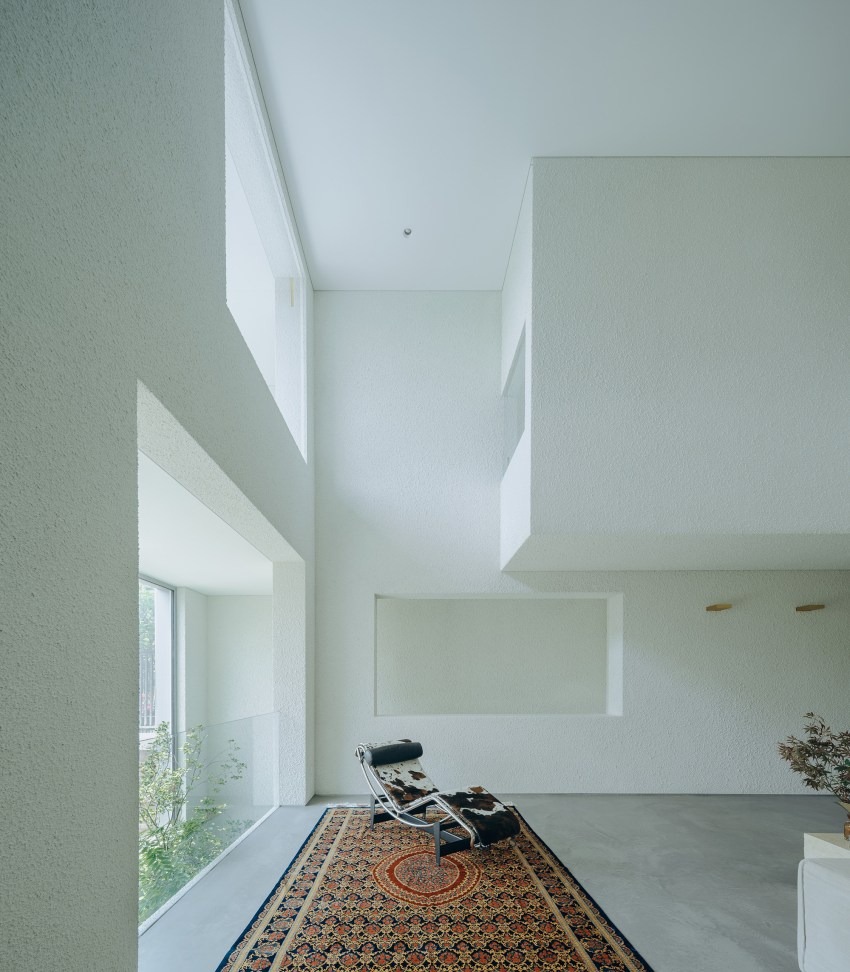
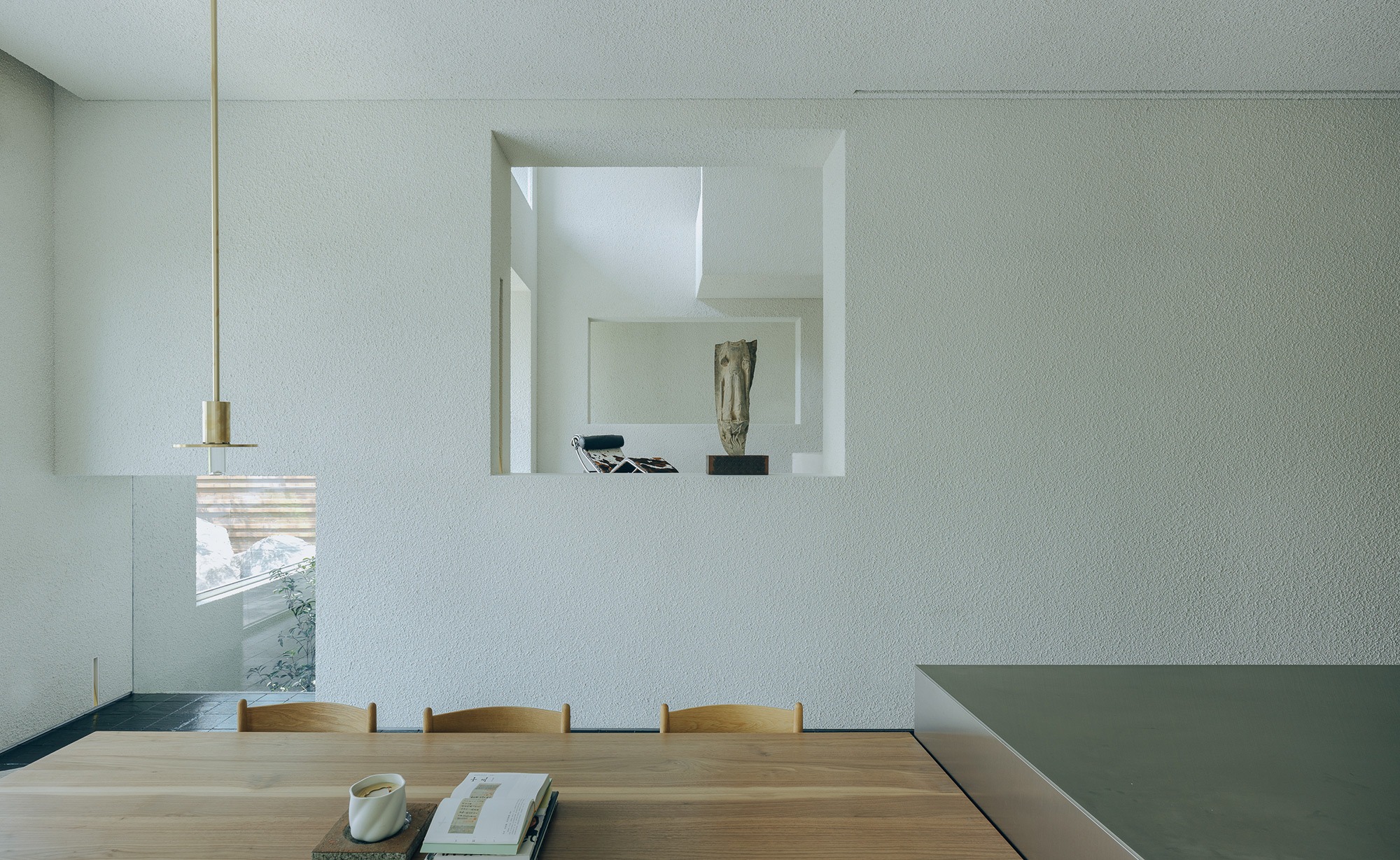
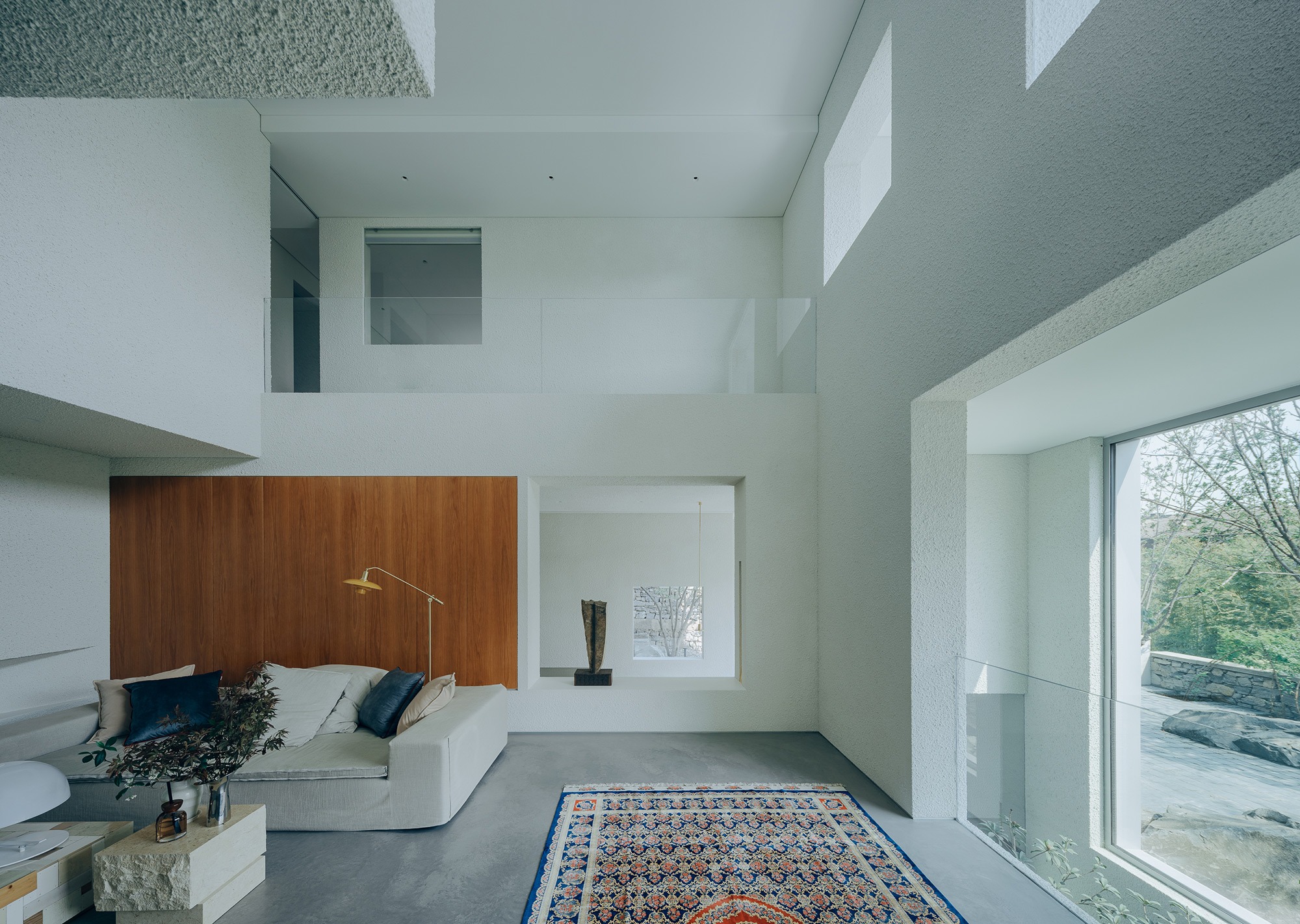
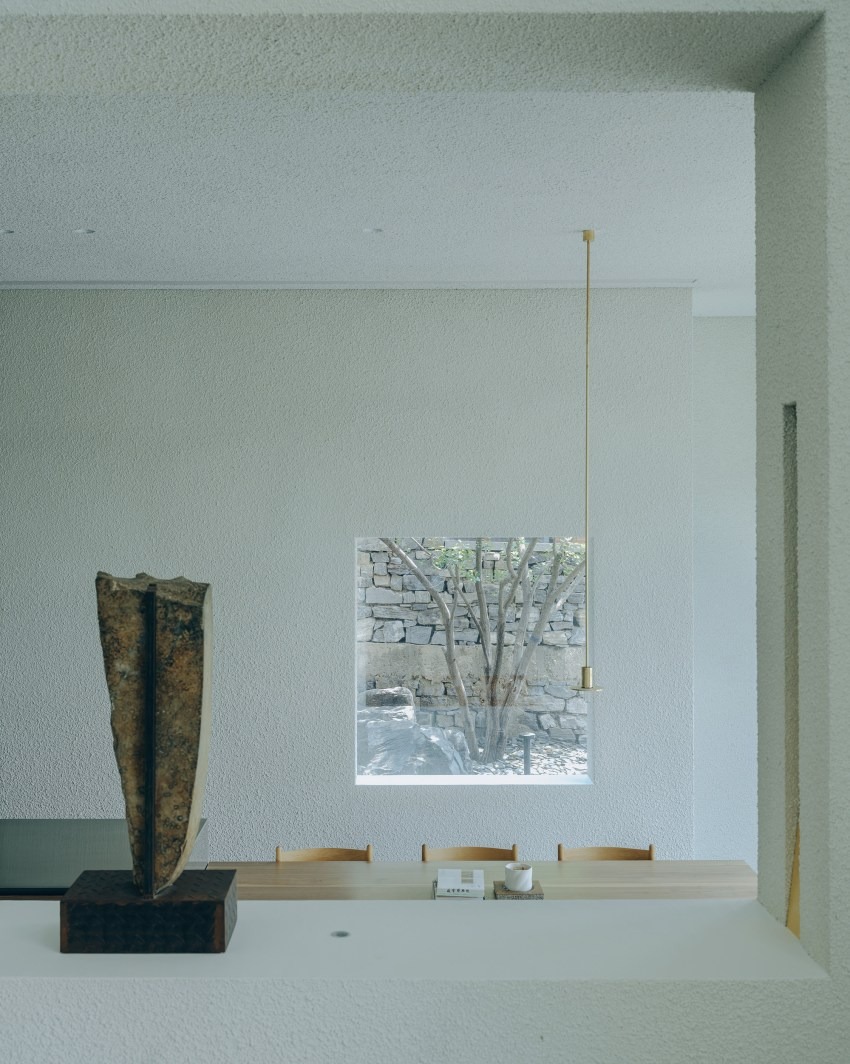
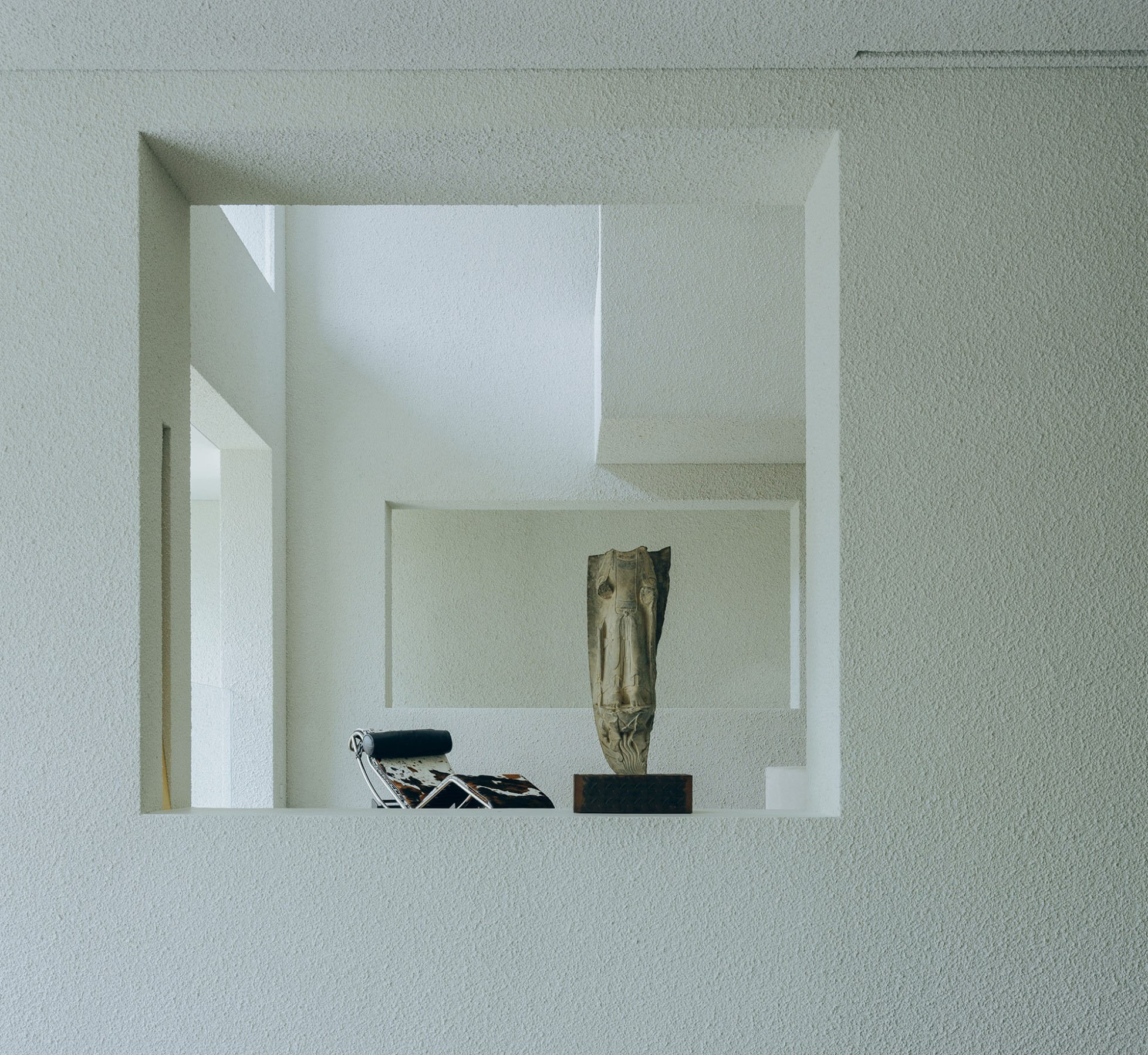
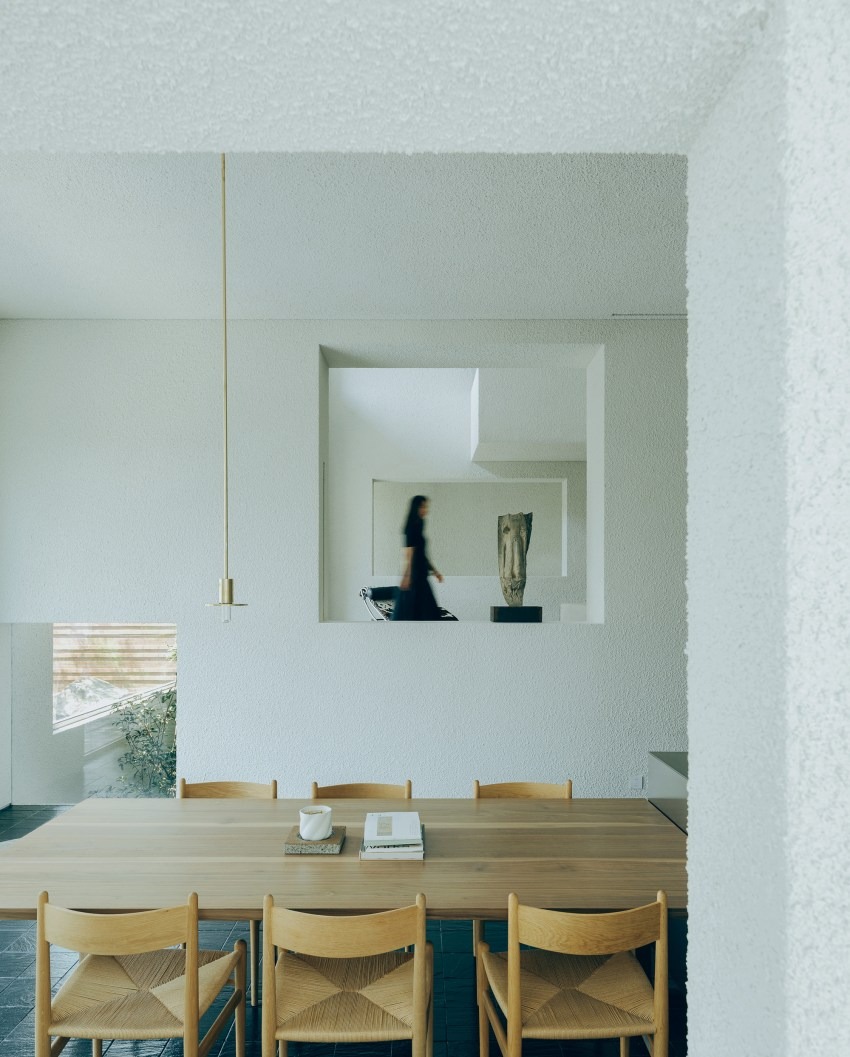
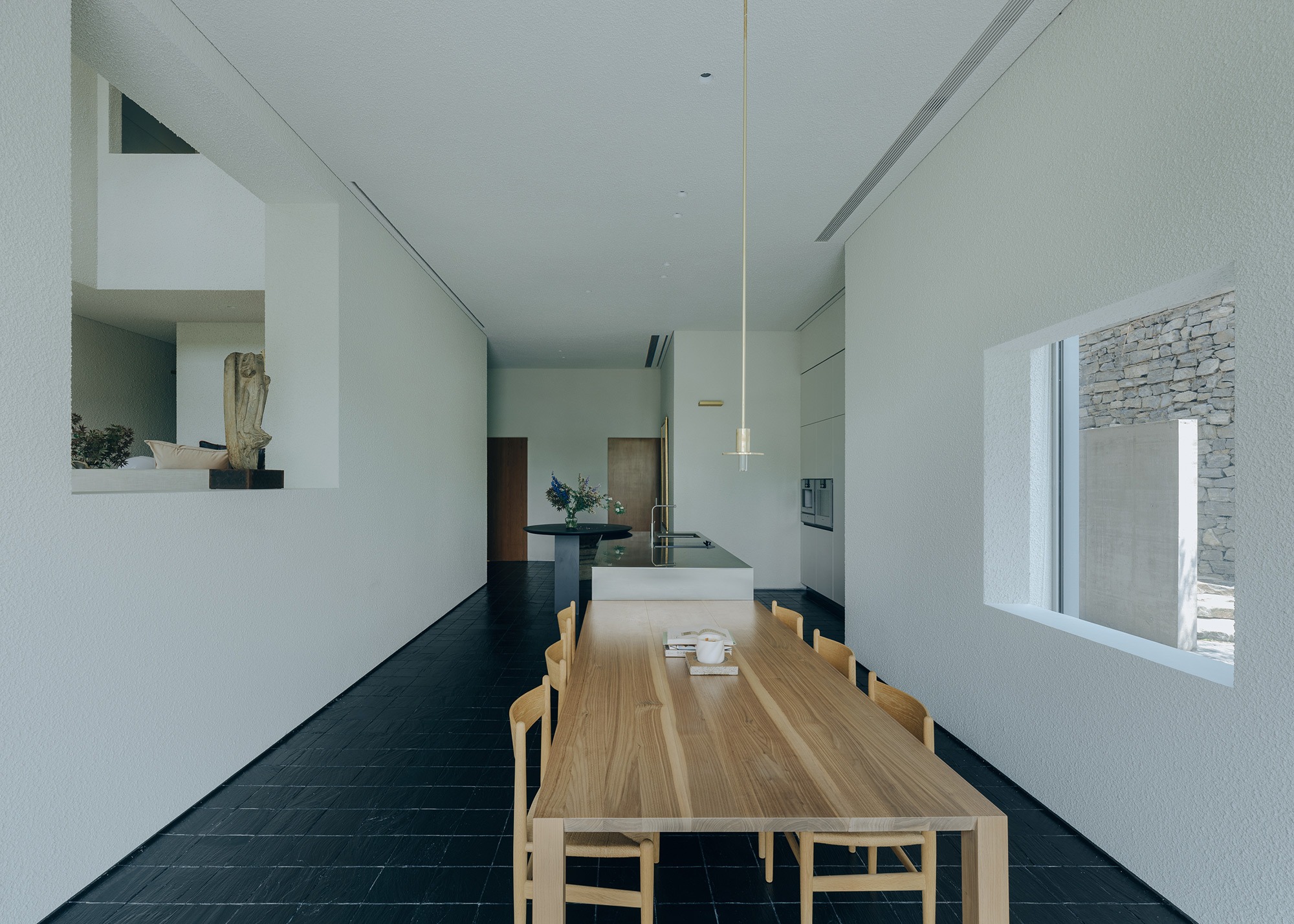
House J, situated in the mountainous western outskirts of Beijing, orchestrates a spatial narrative through careful intervention within an existing residential structure. The redesign by Atelier About Architecture transforms a disjointed and dark layout into a stratified architectural composition where light, vegetation, and program negotiate new boundaries of domesticity. Set against a backdrop of mature plantings and subtle topography, the residence navigates between enclosure and openness, privacy and collectivity, through a conscious manipulation of section, hierarchy, and garden interface.
Reframing the Existing: From Dysfunctional Layout to Spatial Clarity
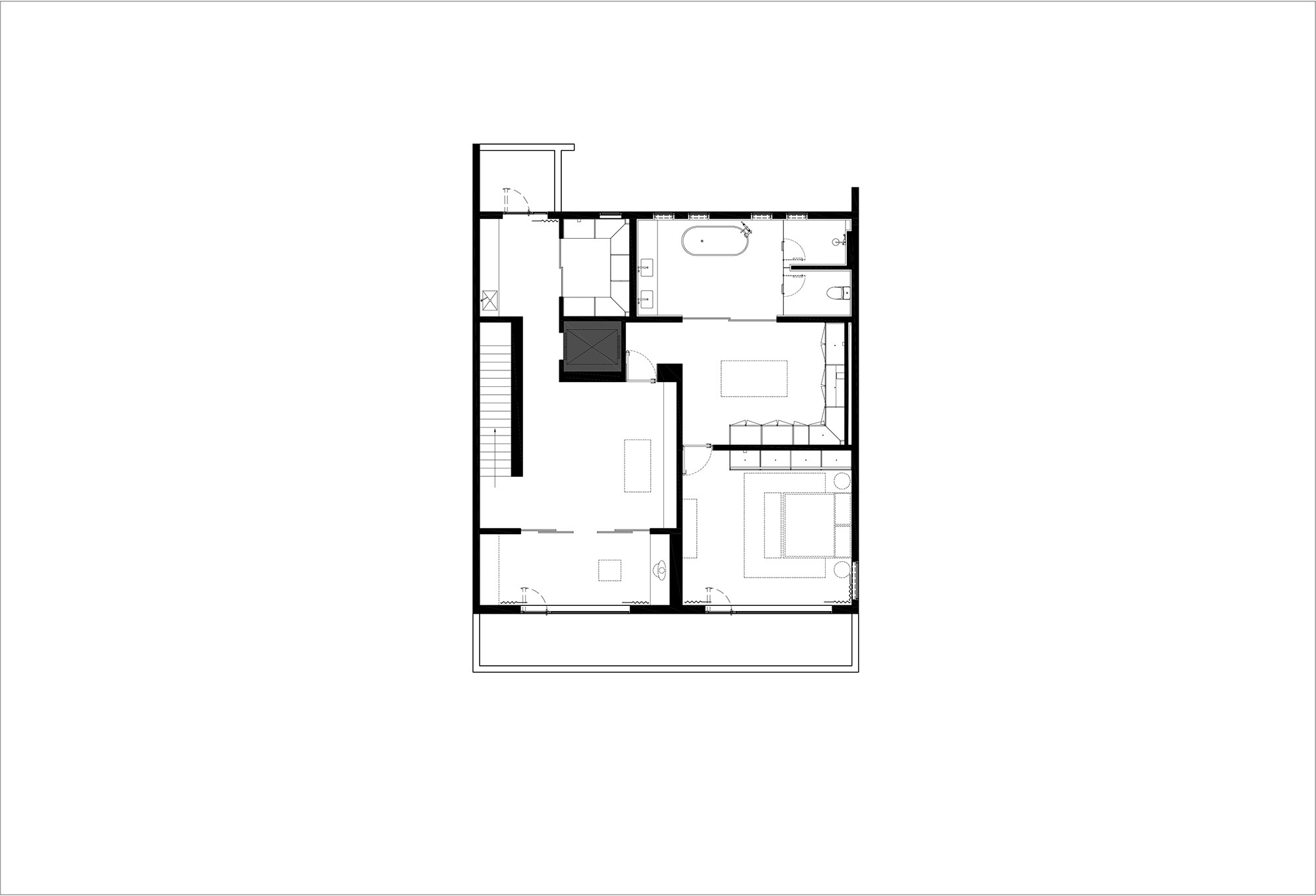
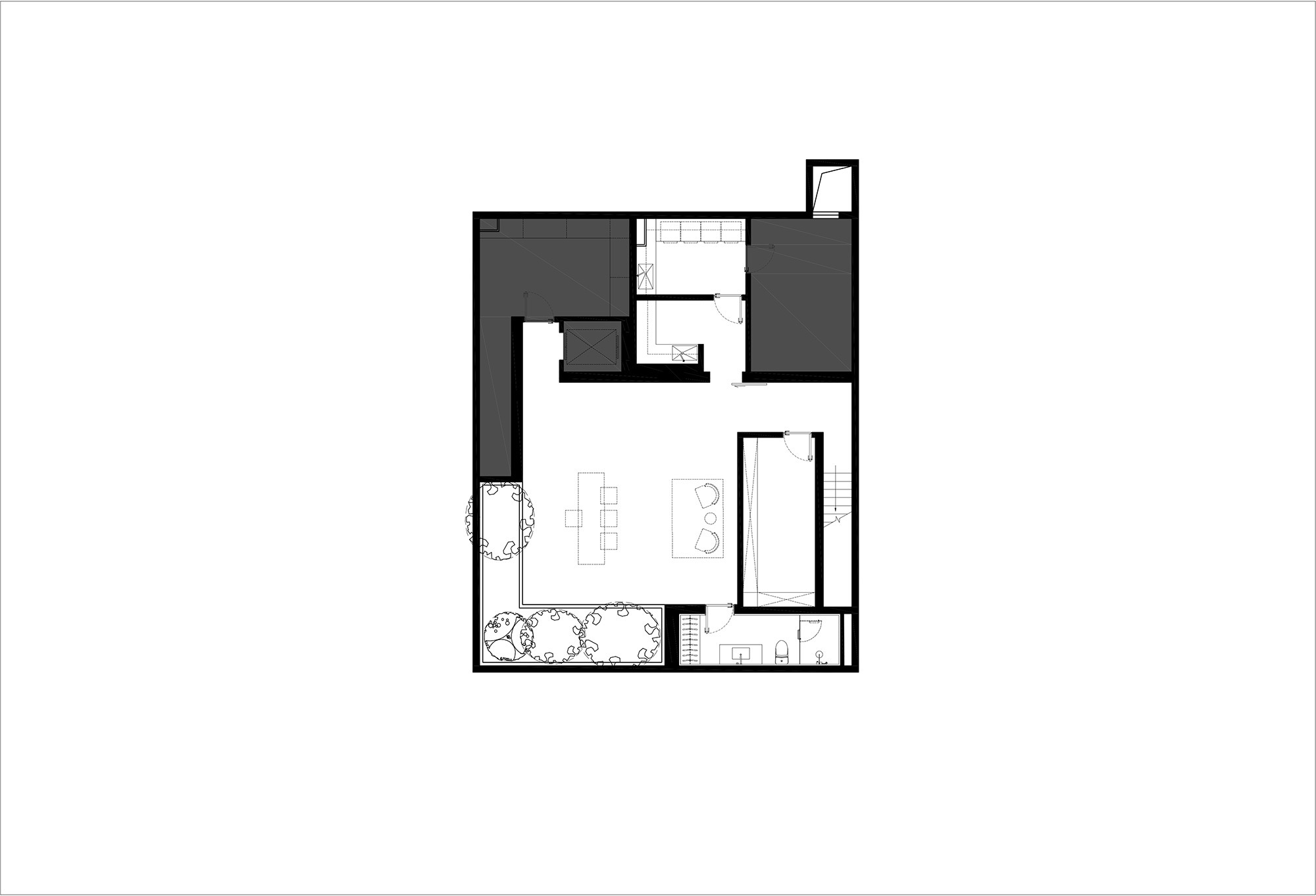
Poor internal proportions burdened the original structure on the north side of the garden. At its core was an oversized central hall that distorted spatial distribution, pressing against the usability of both the upper floors and adjacent rooms. The decision to repurpose rather than erase the existing volume led to a surgical dismantling of architectural elements that inhibited daylight and livability, including a protruding balcony-turned-sunroom that further darkened the plan. These moves formed the basis of a subtractive design approach focused on rescaling and redistributing volume for human use.
Poor internal proportions burdened the original structure on the north side of the garden. At its core was an oversized central hall that distorted spatial distribution, pressing against the usability of both the upper floors and adjacent rooms. The decision to repurpose rather than erase the existing volume led to a surgical dismantling of architectural elements that inhibited daylight and livability, including a protruding balcony-turned-sunroom that further darkened the plan. These moves formed the basis of a subtractive design approach focused on rescaling and redistributing volume for human use.
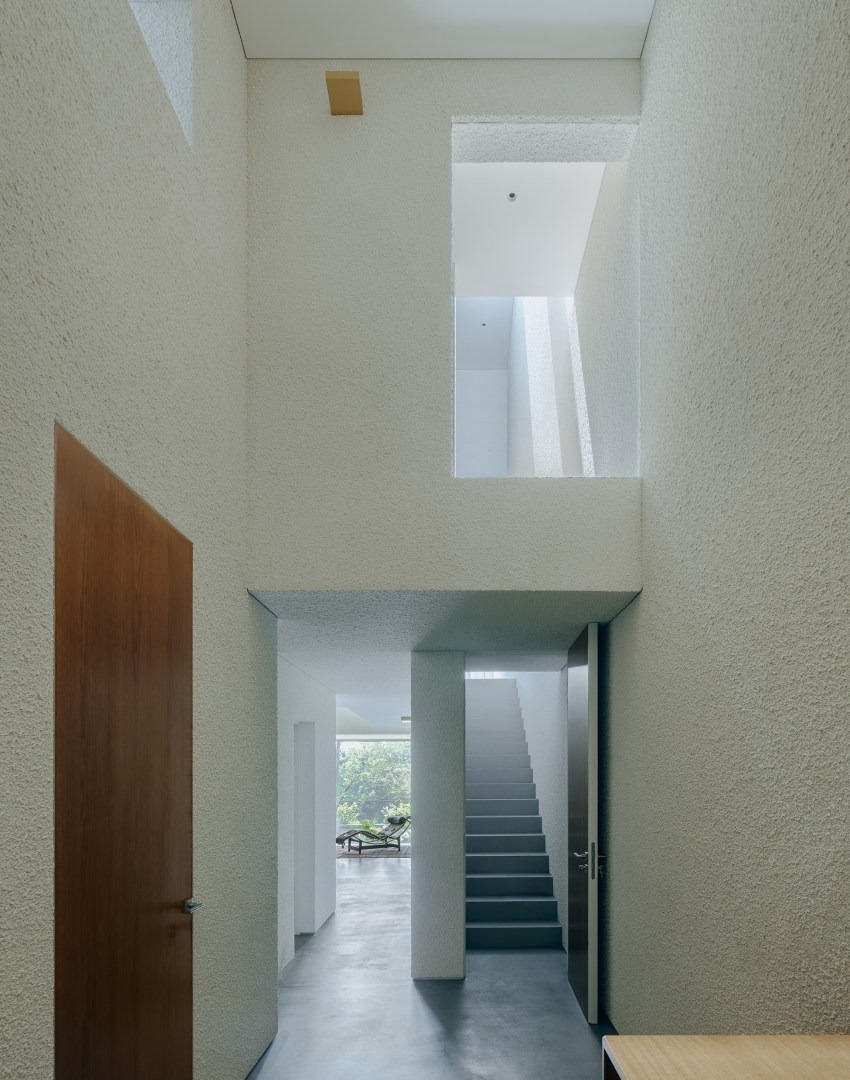
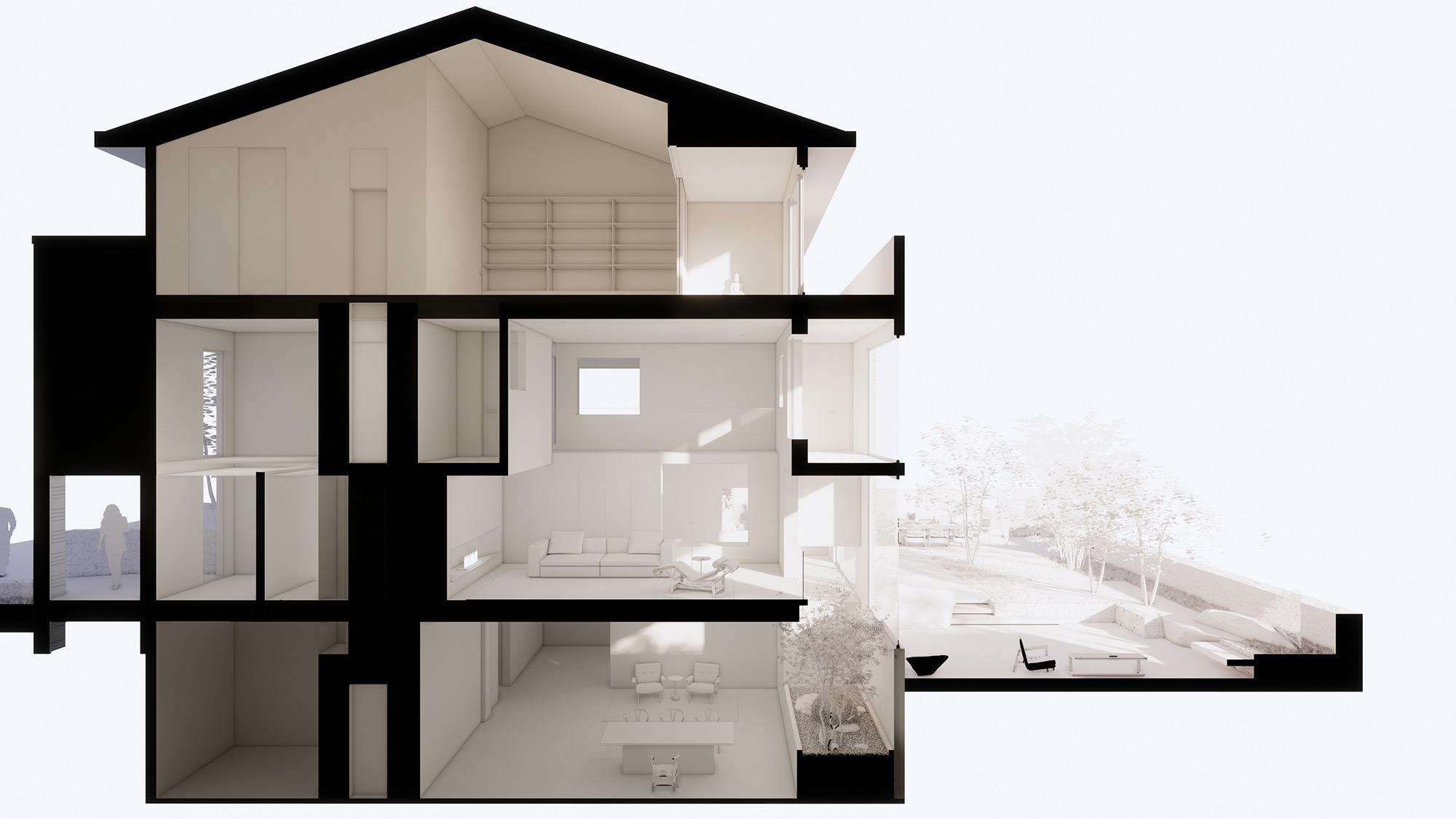
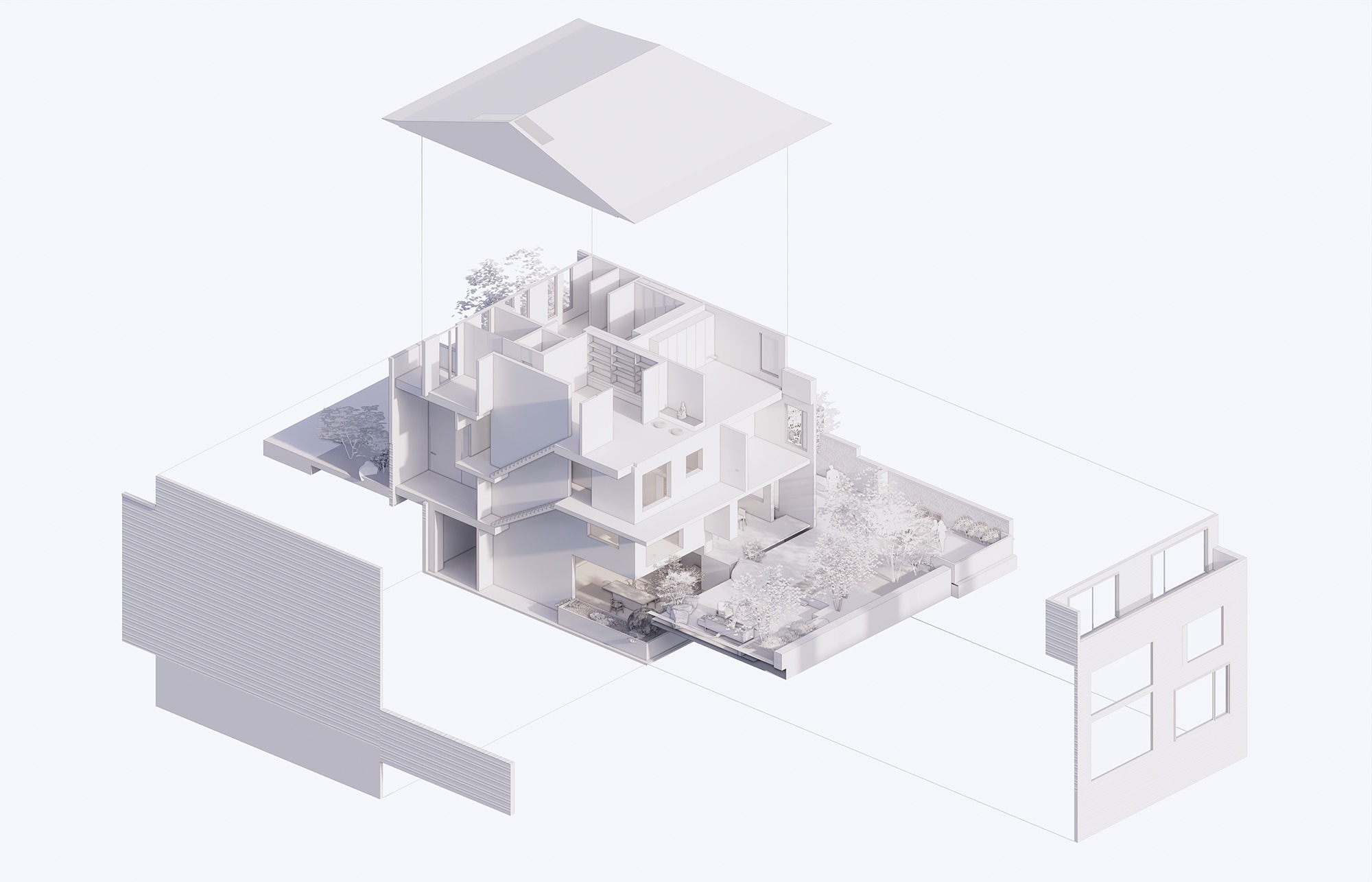
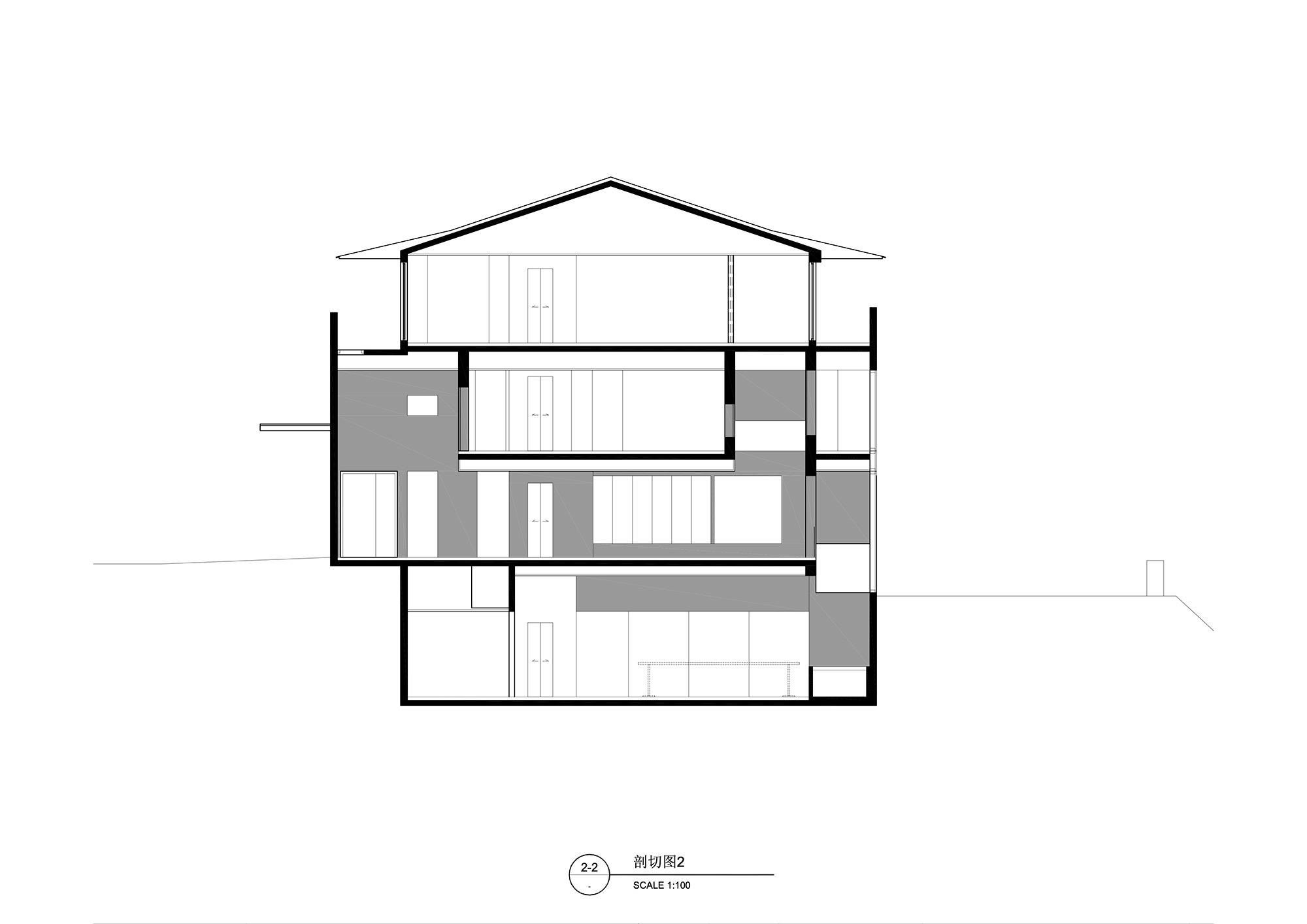
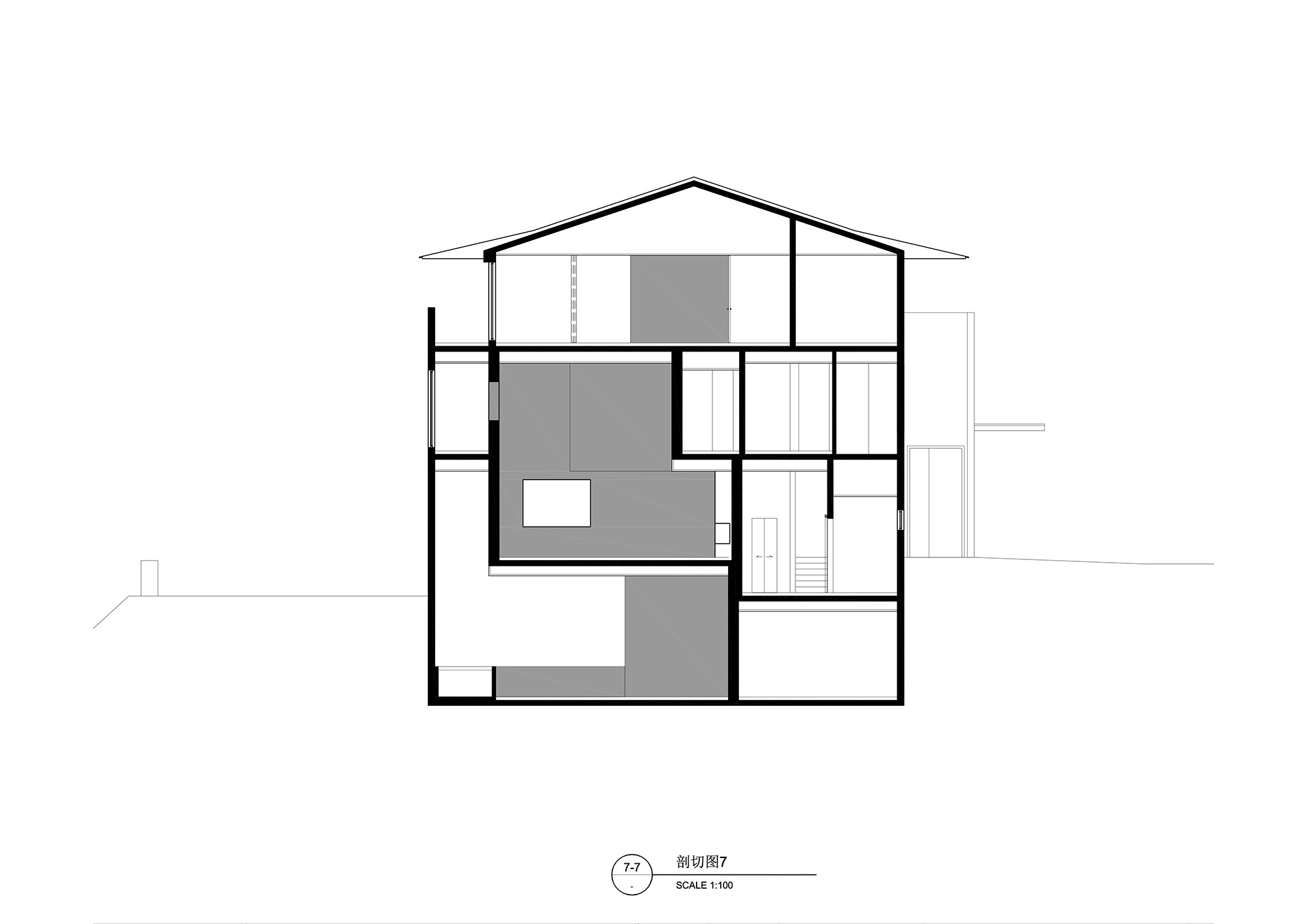
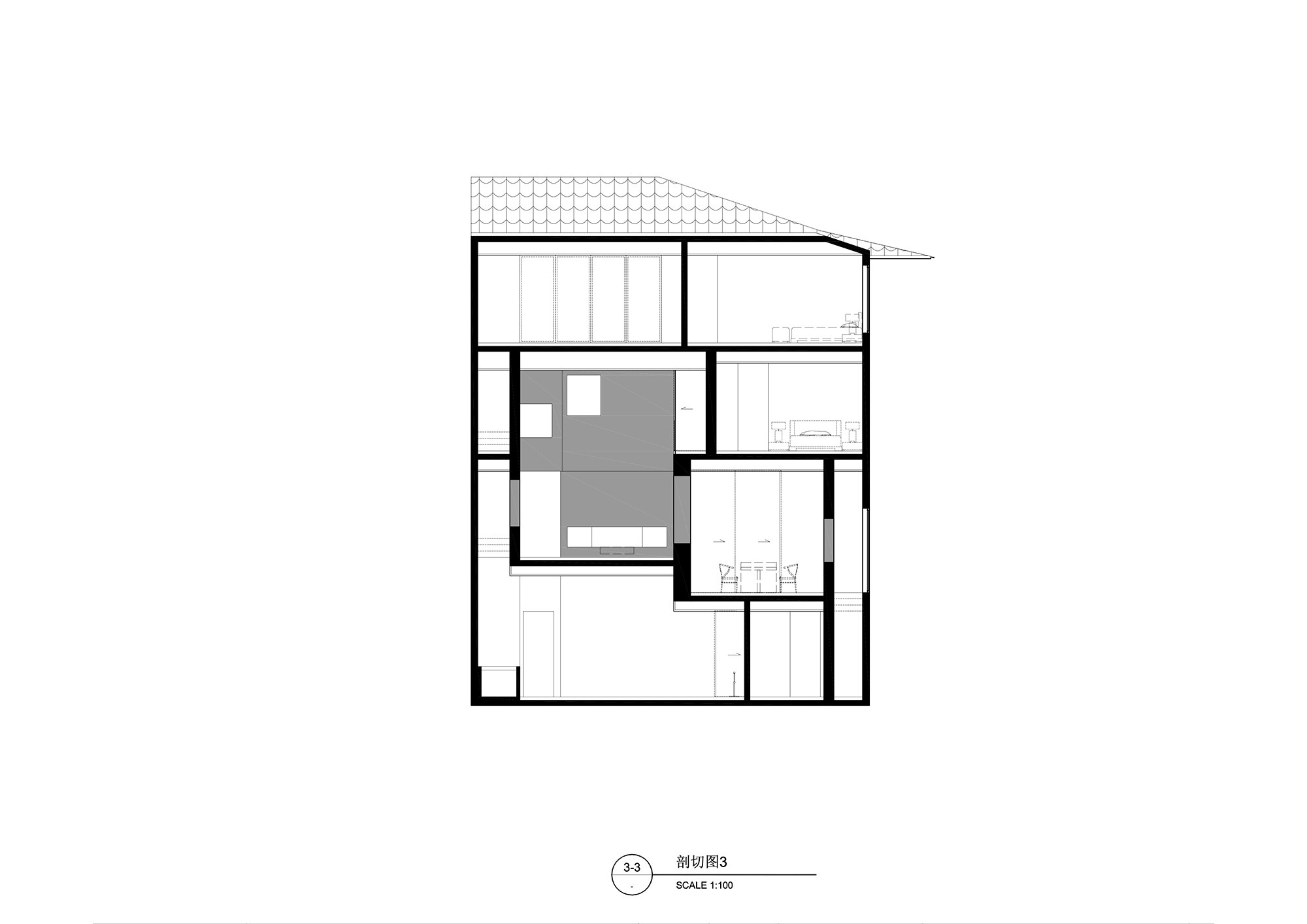
By recalibrating slab levels, adjusting floor heights, and treating additions and subtractions as a form of architectural editing, the layout has been reorganized with clarity. The project resists the allure of open-plan monotony, instead embracing spatial staging through sectional shifts. The result is a layered domestic experience where public and private domains are configured through overlapping voids and adaptive thresholds. The recalibrated envelope more accurately reflects contemporary living patterns for a dispersed, multi-generational family, allowing for individualized occupation within a shared framework.
Landscaped Topography: Translating Subtle Terrain into Spatial Differentiation
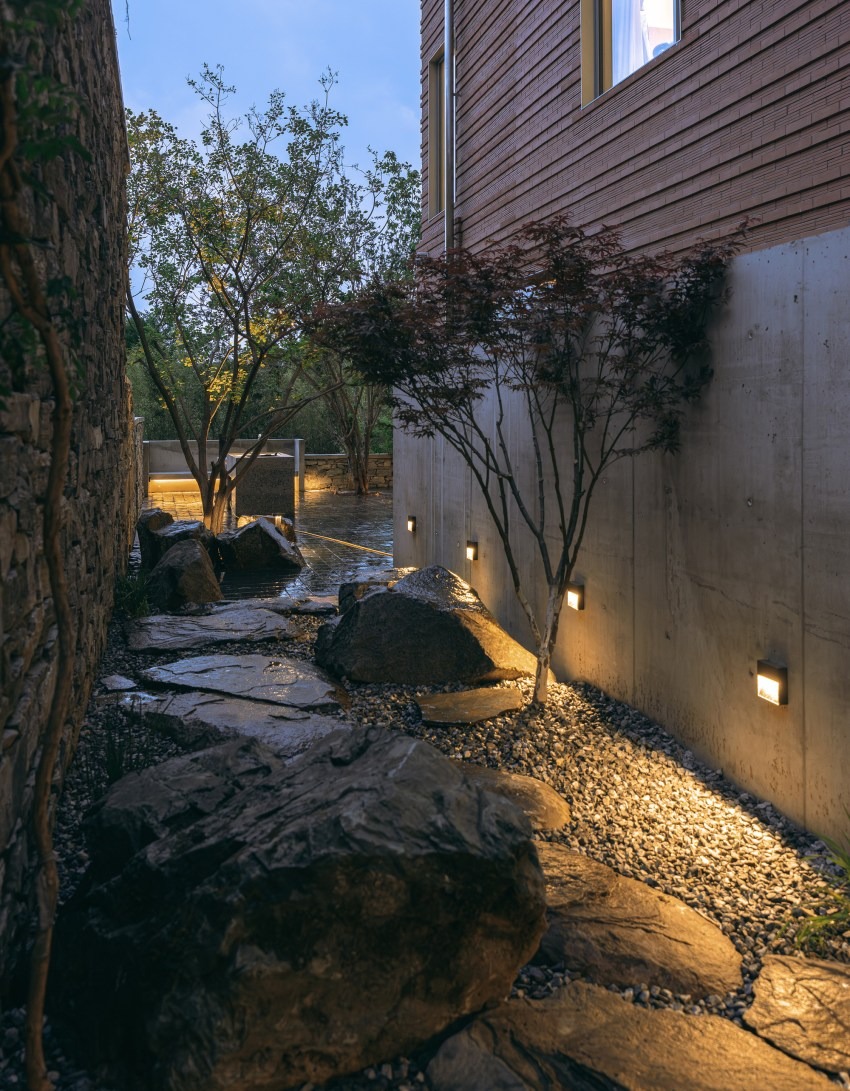
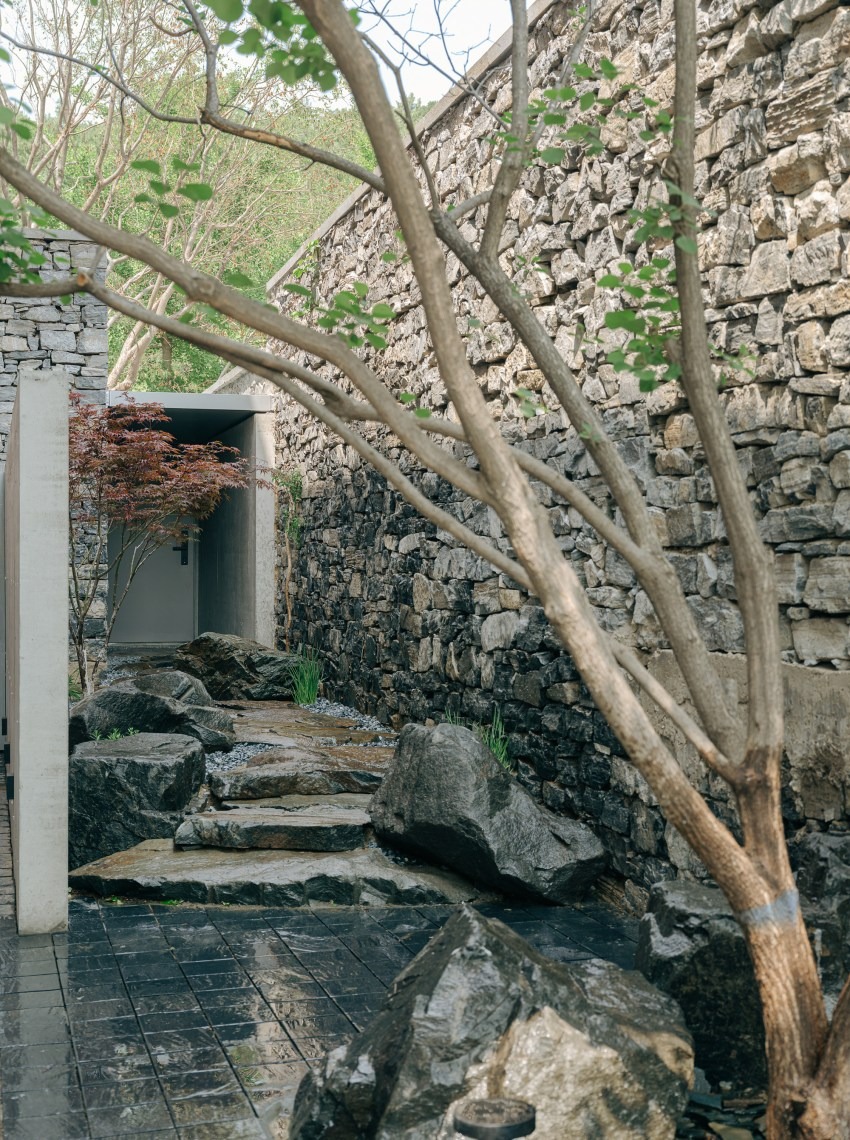
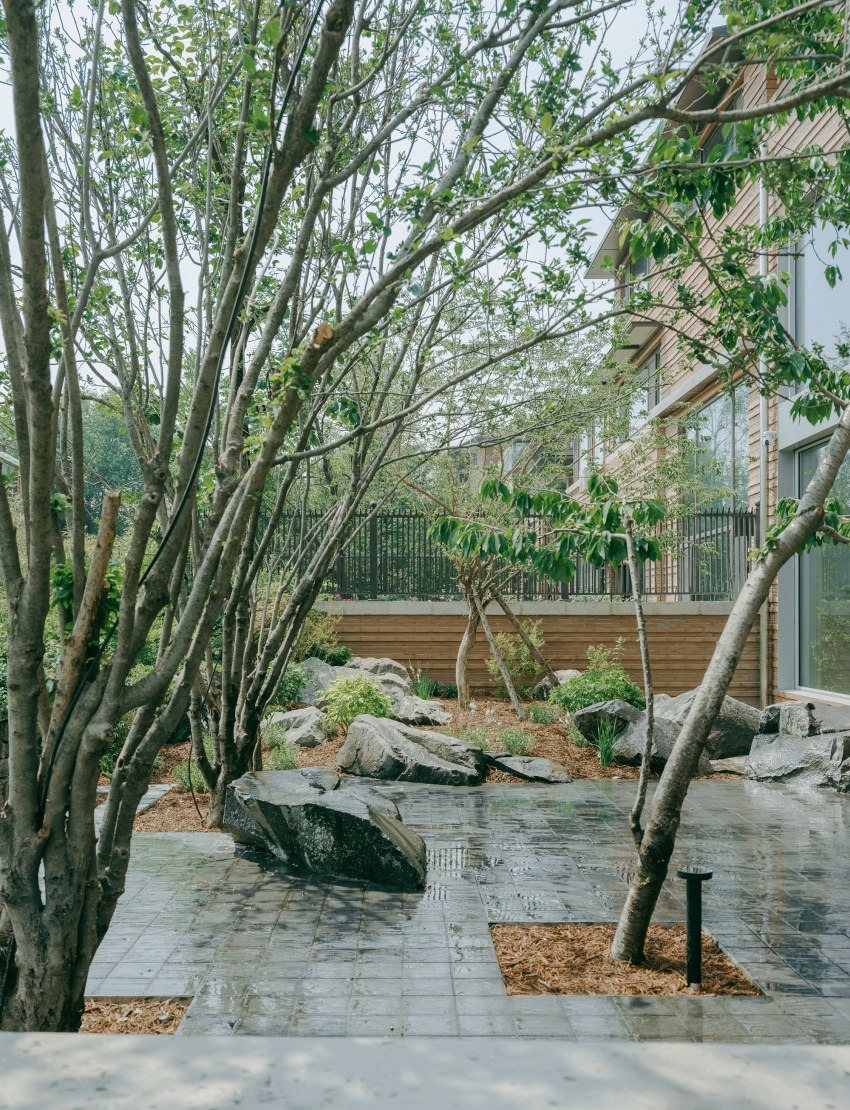
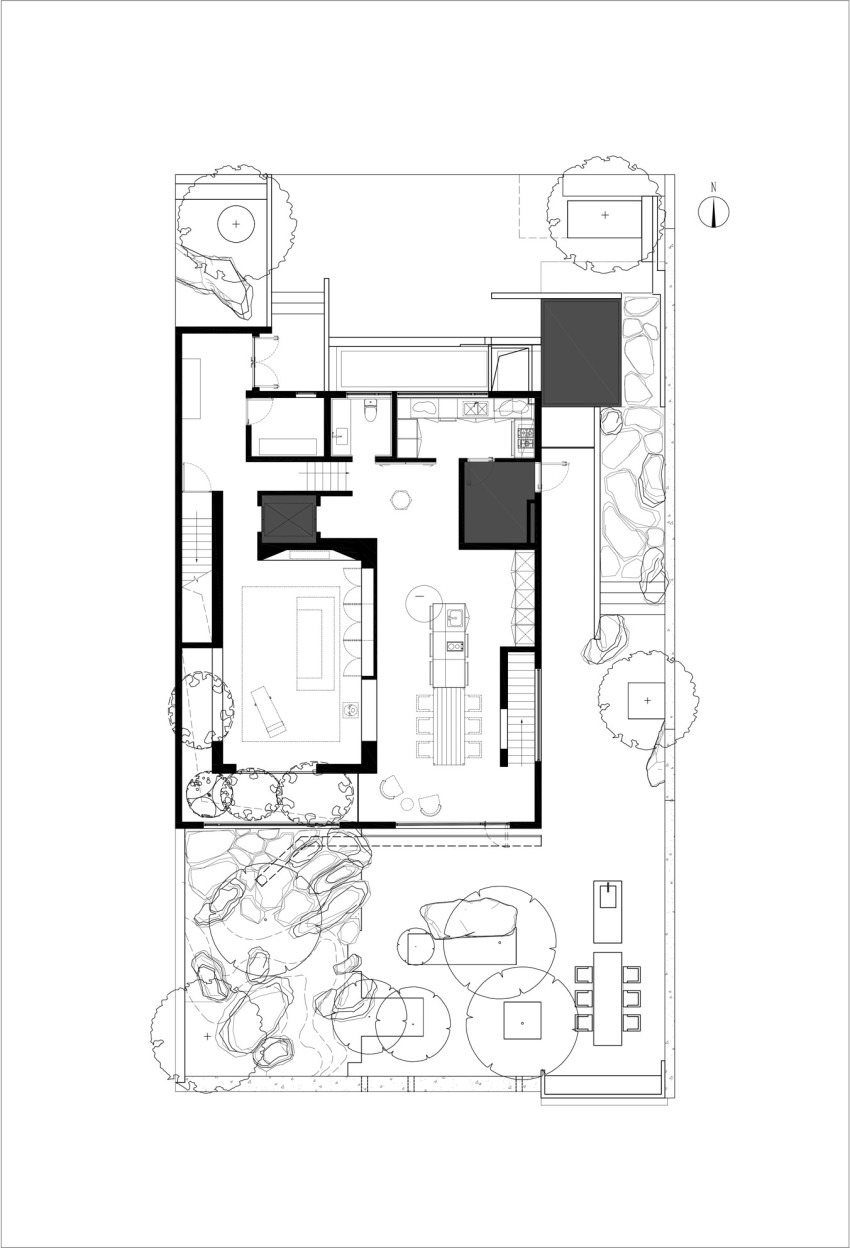
The site itself presents gentle but consequential topographical differences: a vertical drop of up to 1.5 meters between north and south boundaries, and more subtle grading in the east garden. Rather than being leveled or concealed, these shifts in elevation have been incorporated into the architectural sequence and responded to in section. The house treats contour as datum, orchestrating a nuanced sequence of entries, views, and transitions that manifest in varied floor levels and perspectives throughout the ground plane.
The site itself presents gentle but consequential topographical differences: a vertical drop of up to 1.5 meters between north and south boundaries, and more subtle grading in the east garden. Rather than being leveled or concealed, these shifts in elevation have been incorporated into the architectural sequence and responded to in section. The house treats contour as datum, orchestrating a nuanced sequence of entries, views, and transitions that manifest in varied floor levels and perspectives throughout the ground plane.
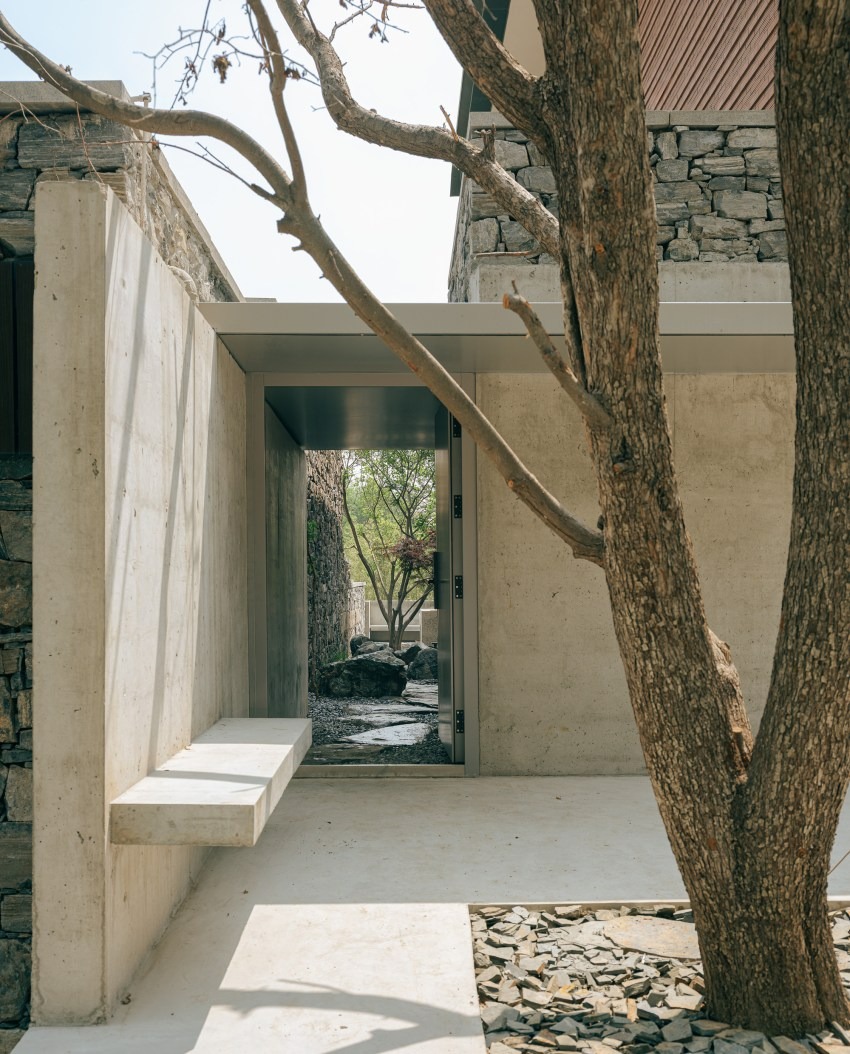
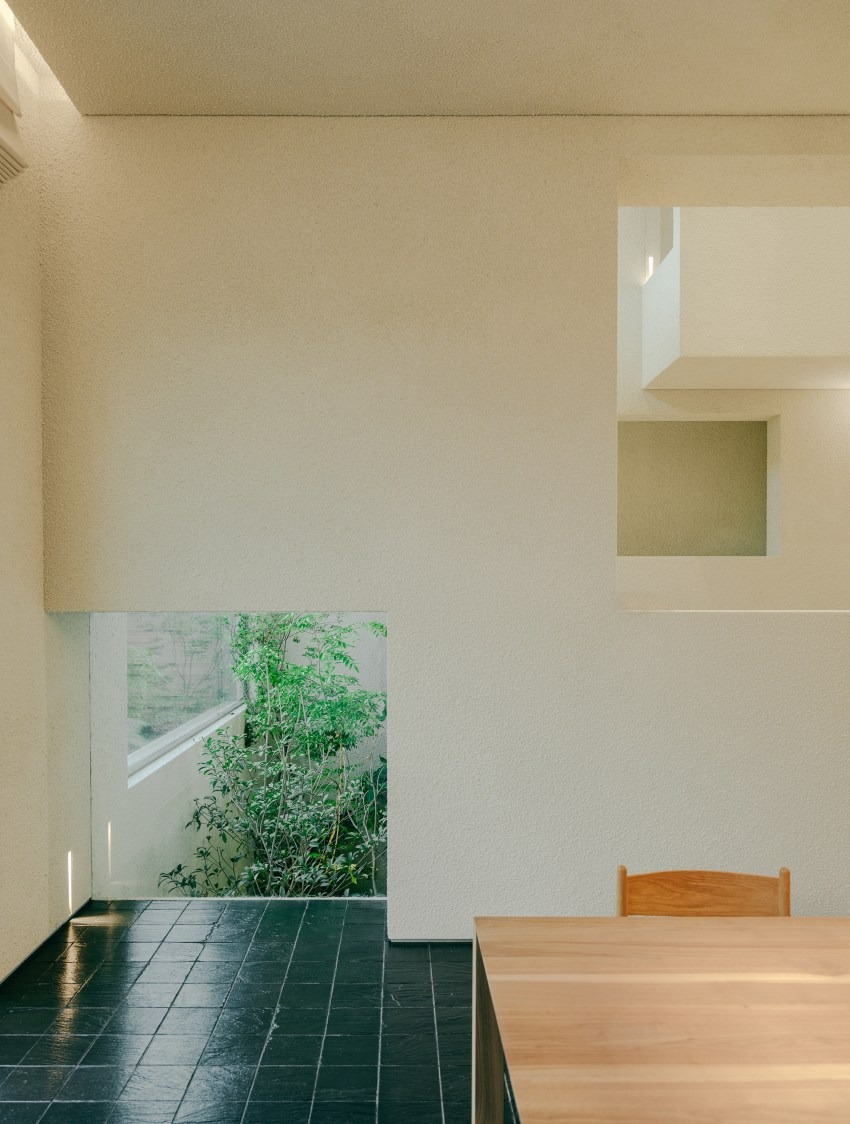
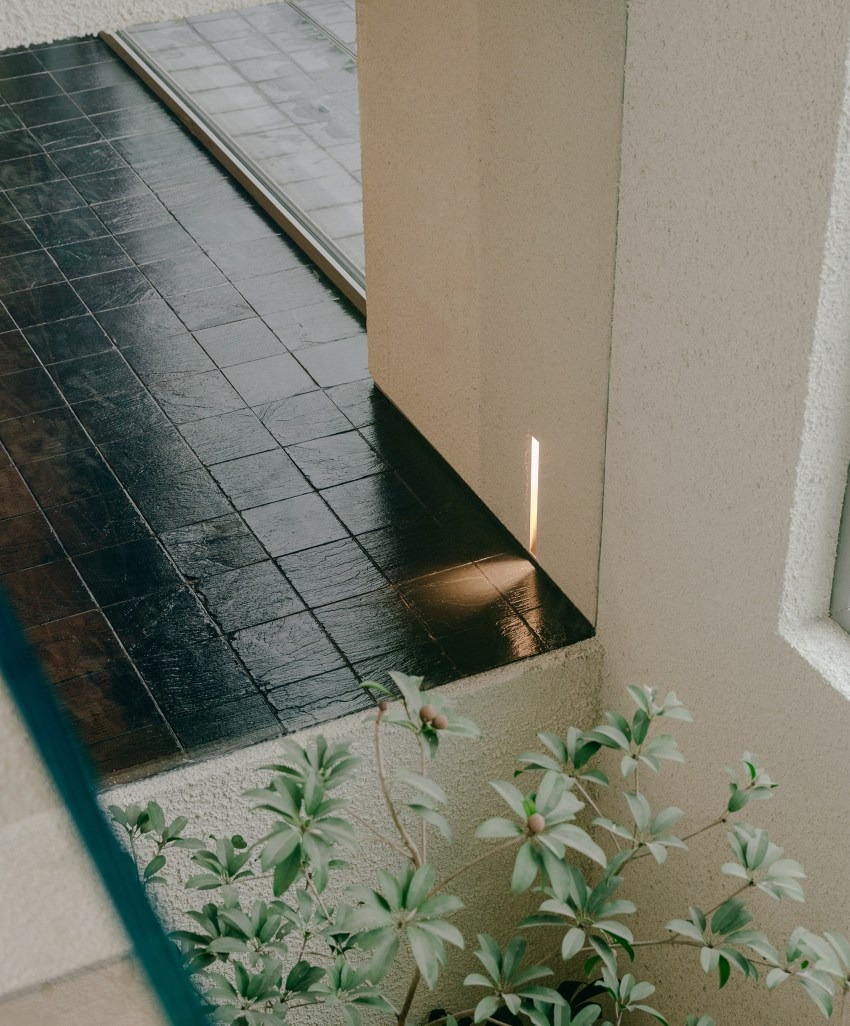
The gradient becomes a design tool that physically and perceptually defines the program. The semi-independent eastern entry, approached through a lowered garden, offers access to a part-sunken level defined by lush vegetation and diagonal sightlines. These sectional dispositions challenge linear notions of circulation and introduce thresholds that are as spatially articulated as the interior volumes they serve. In doing so, the house aligns itself with the terrain without dominating it, embedding architecture into the slope rather than opposing it.
Living Among the Trees: The Cantilevered Box and the Symbiotic Interior Garden
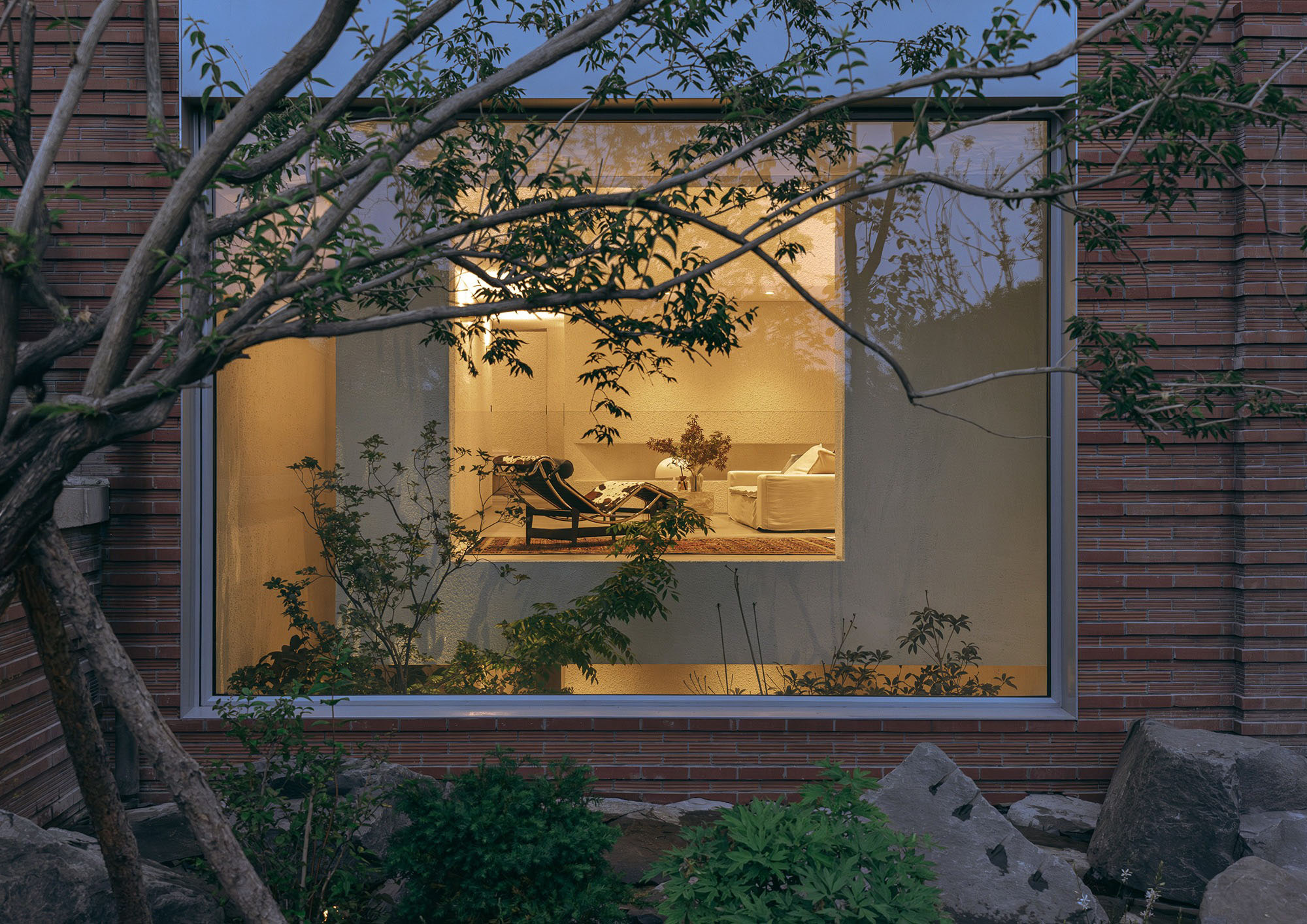
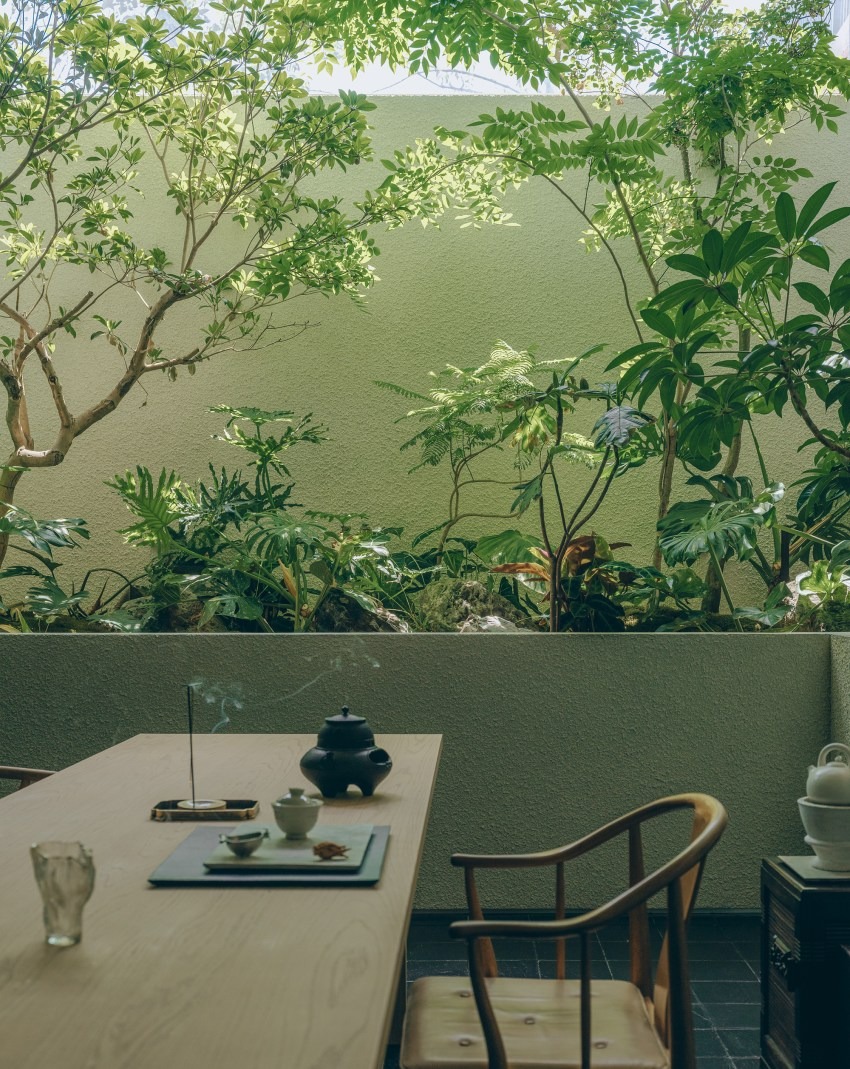
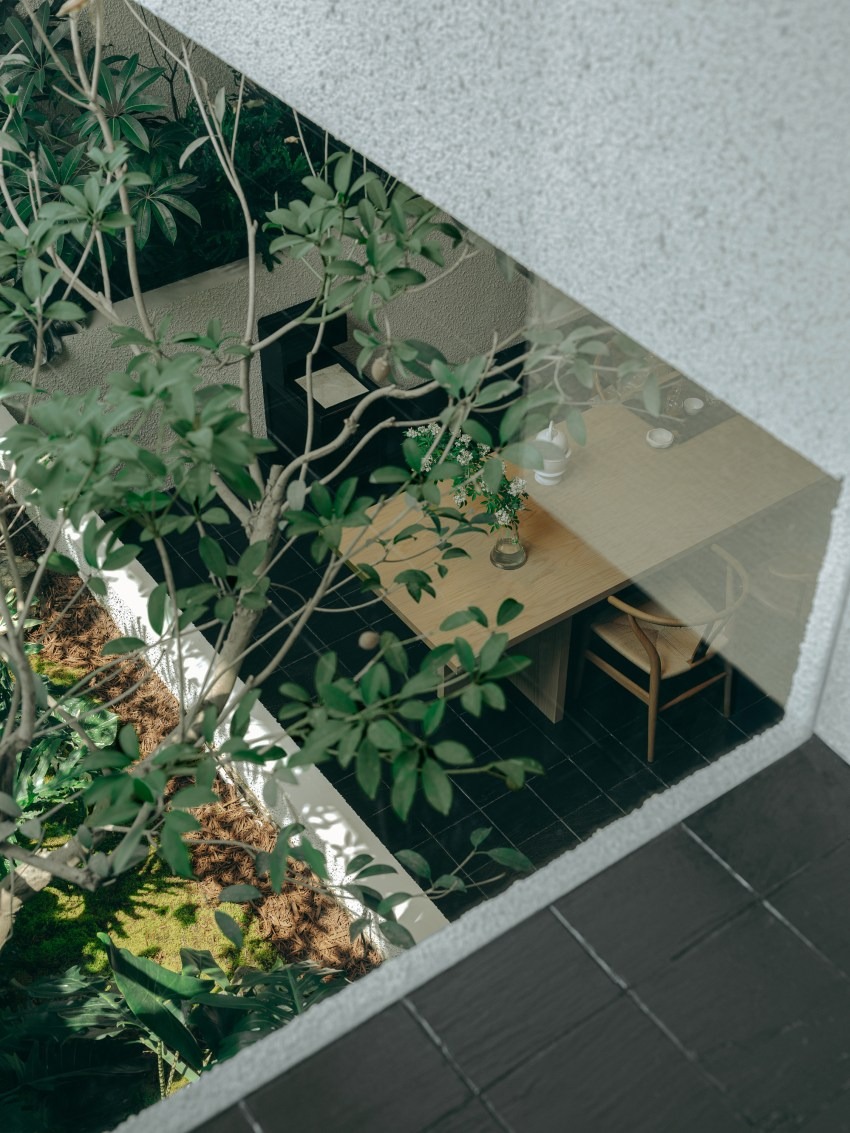
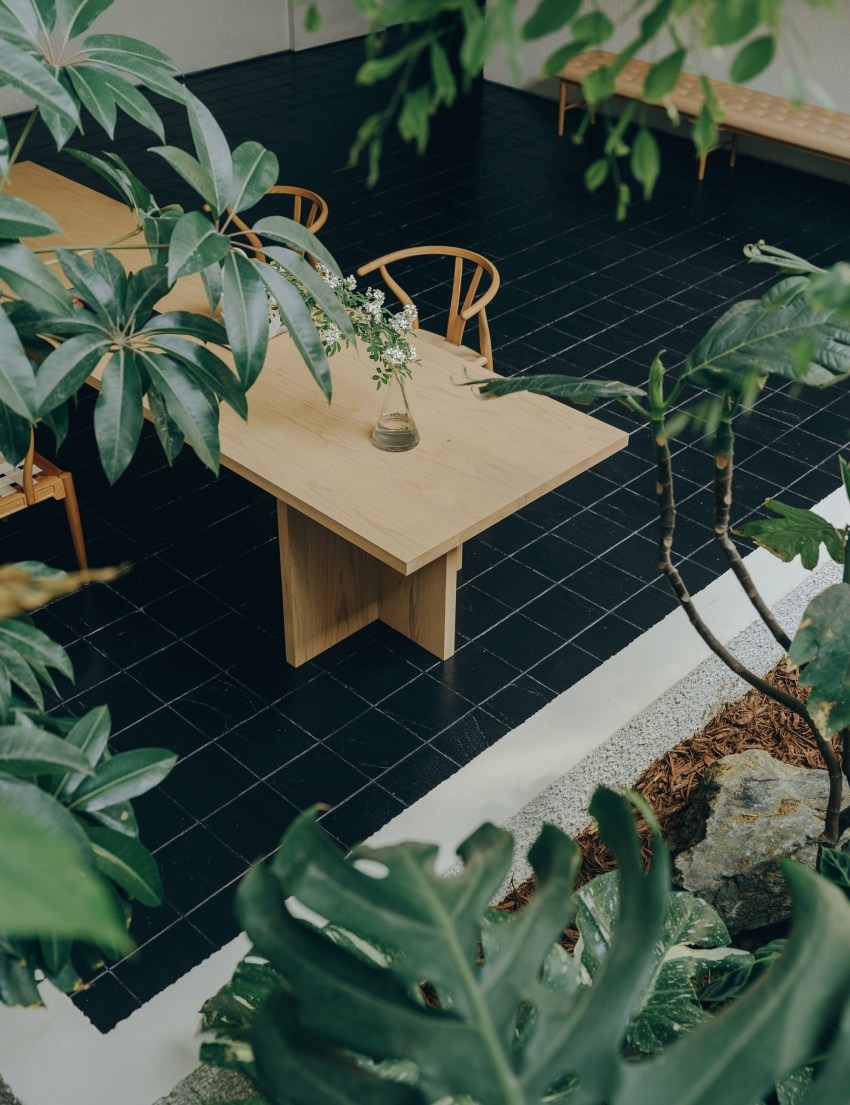
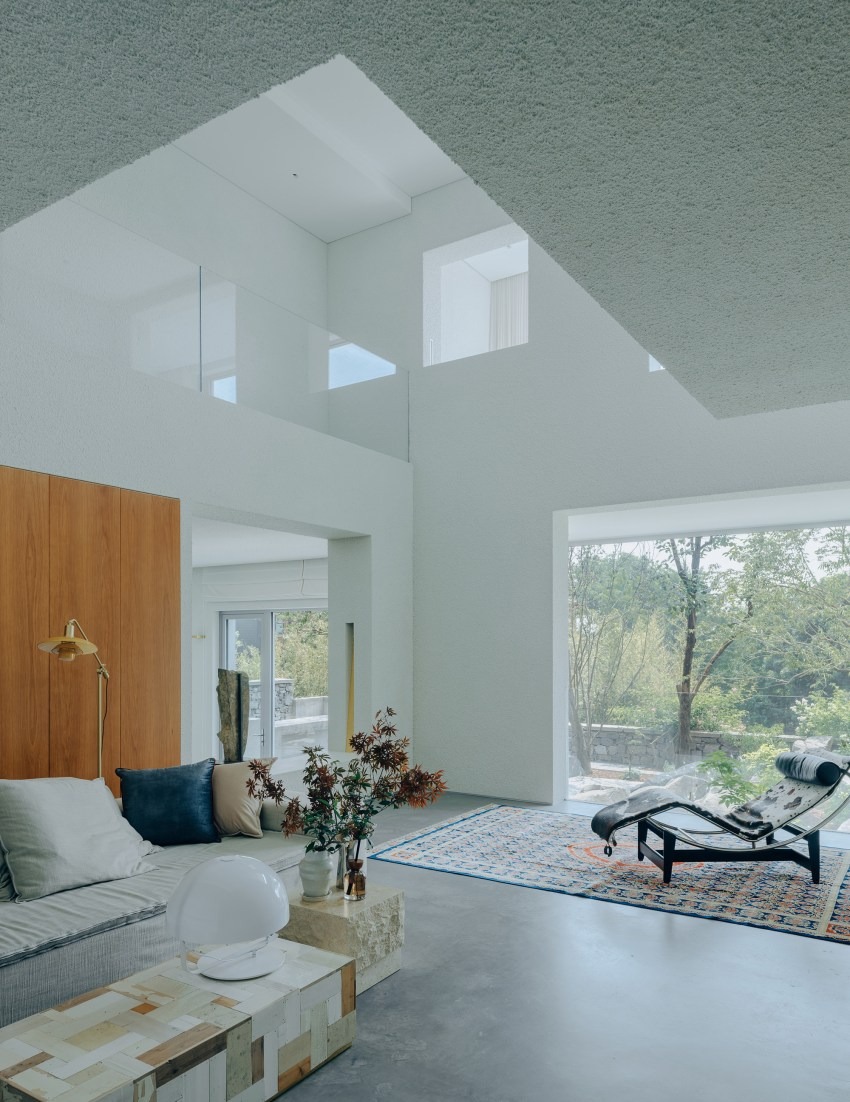
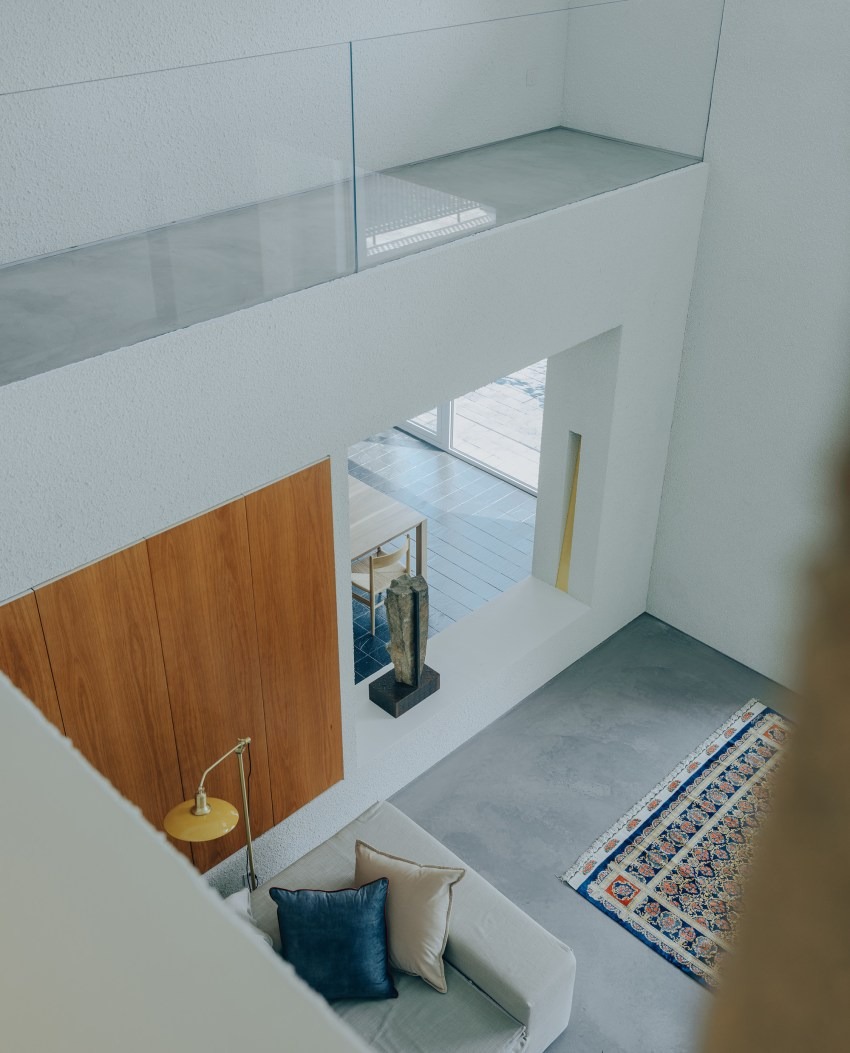
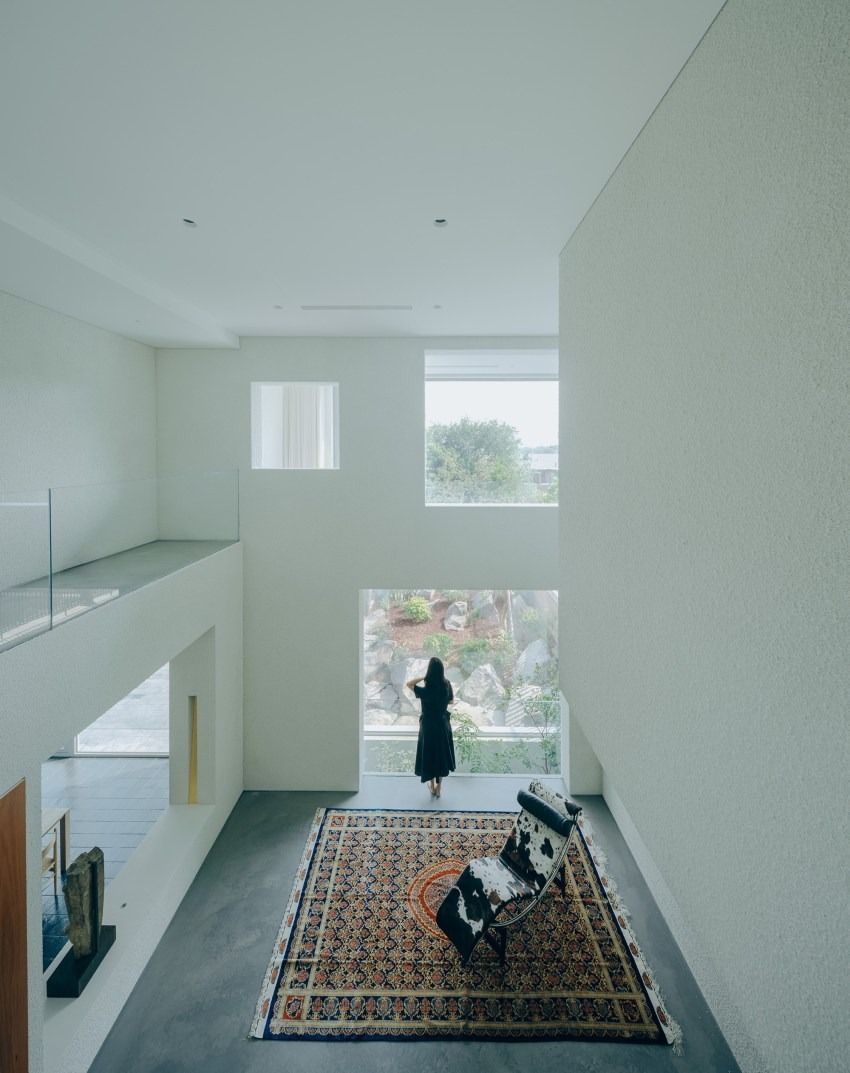
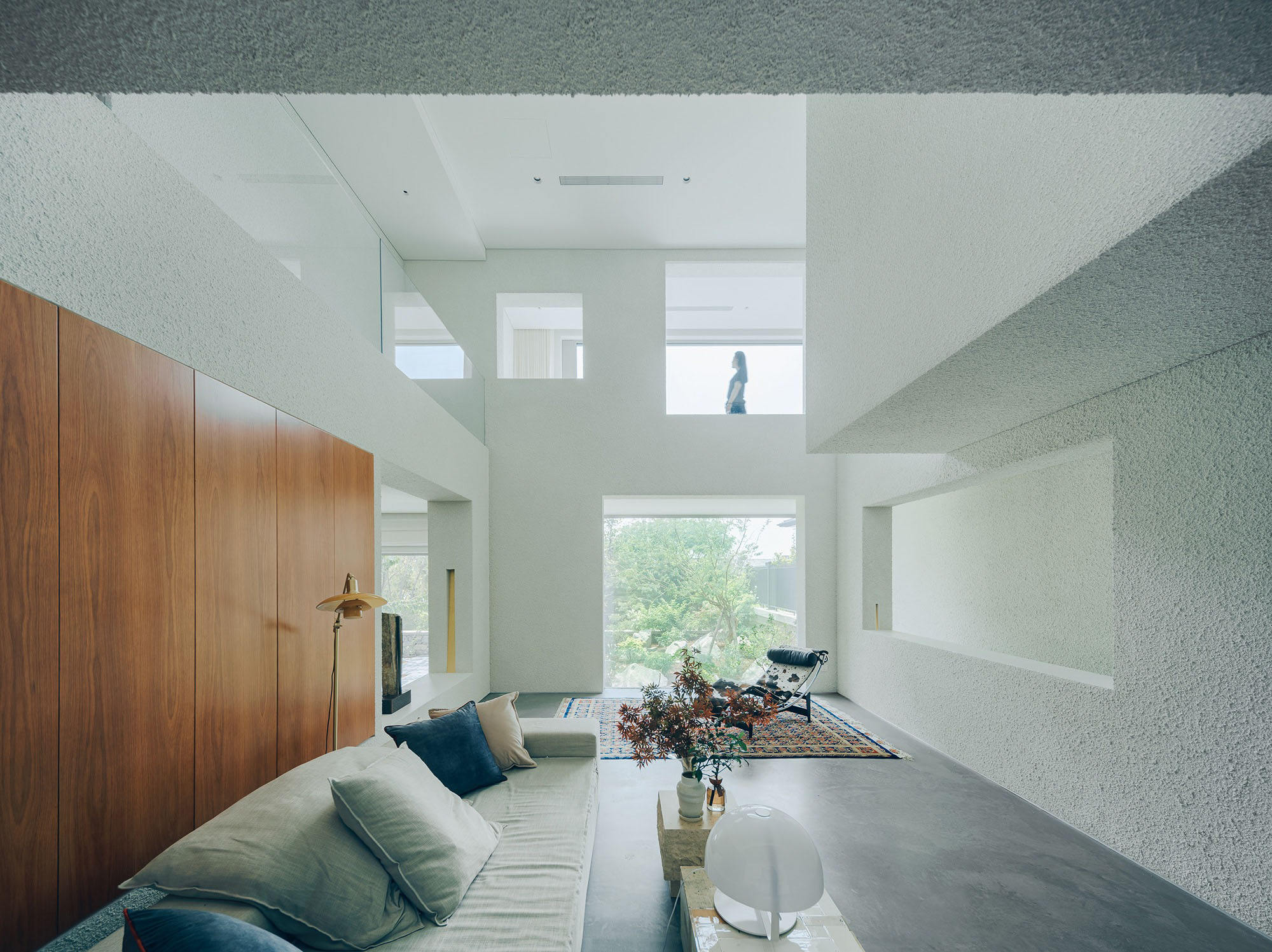
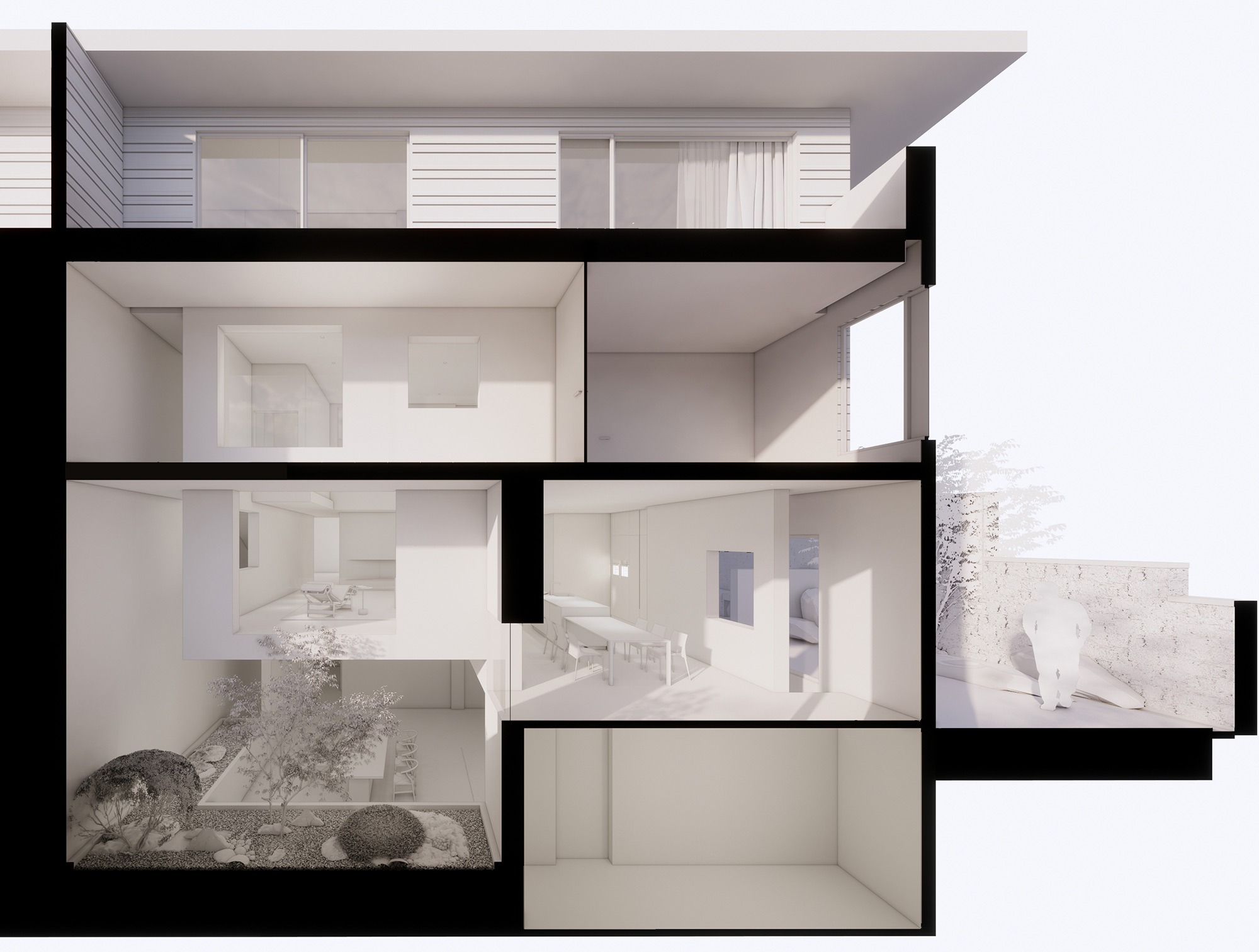
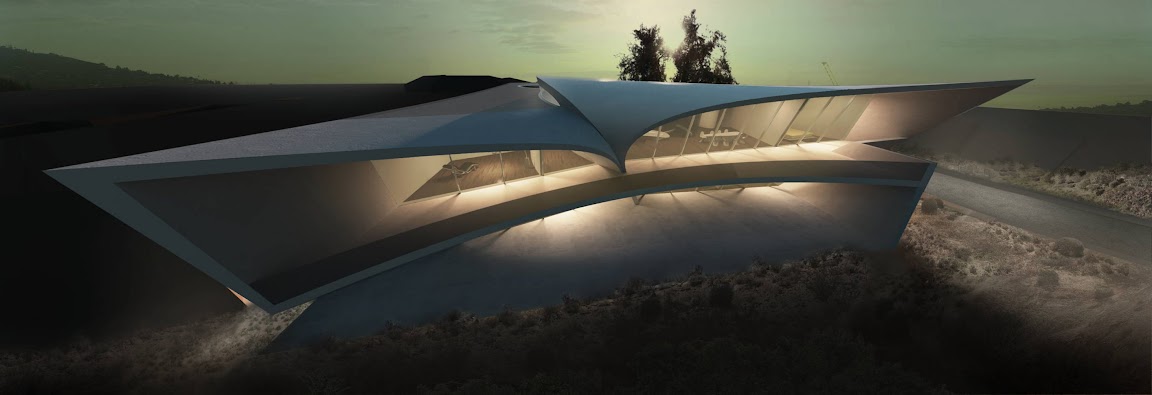
At the core of House J is a cantilevered living room, raised off the ground and structurally supported by upward-flipped concrete beams that free the ground plane for an open, plant-filled atrium. This ‘floating box’ is not simply a gesture, but a spatial device that mediates between sky and ground, interior and garden. With glazing on multiple sides and vegetated surroundings, the room exists both within and above the garden, creating a suspended zone of repose that remains deeply embedded in its environment.
At the core of House J is a cantilevered living room, raised off the ground and structurally supported by upward-flipped concrete beams that free the ground plane for an open, plant-filled atrium. This ‘floating box’ is not simply a gesture, but a spatial device that mediates between sky and ground, interior and garden. With glazing on multiple sides and vegetated surroundings, the room exists both within and above the garden, creating a suspended zone of repose that remains deeply embedded in its environment.
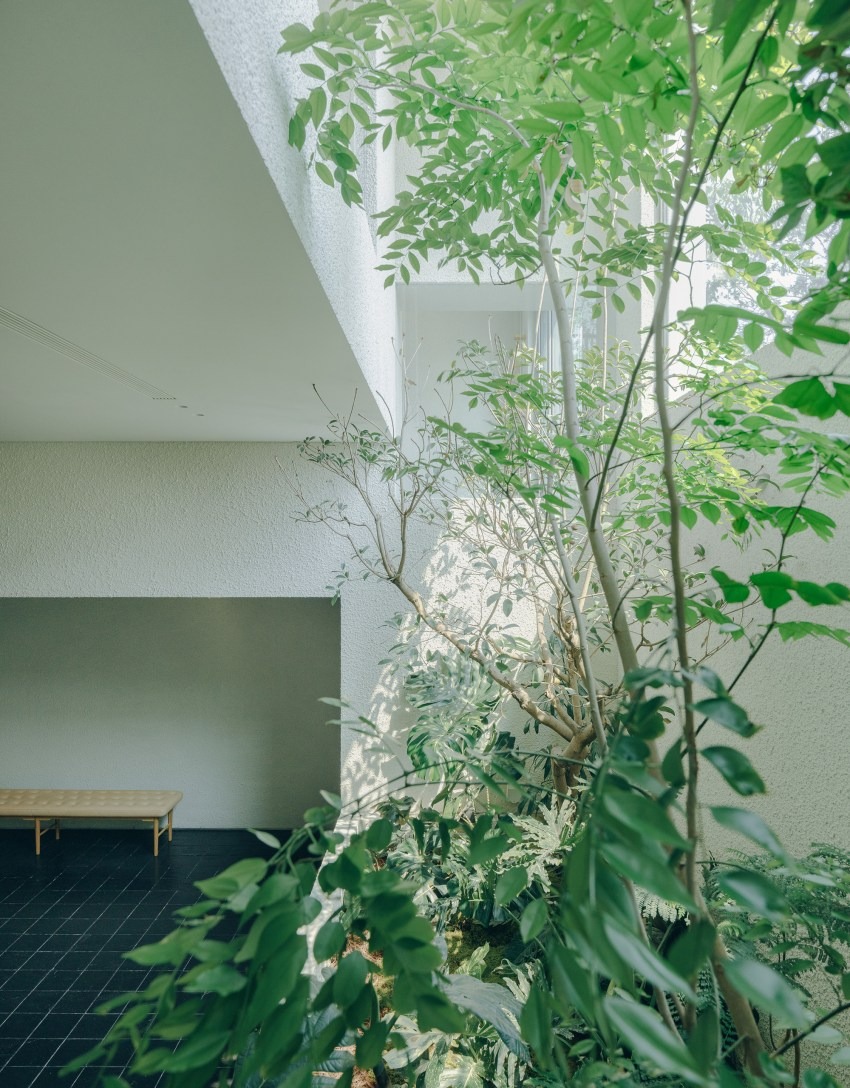
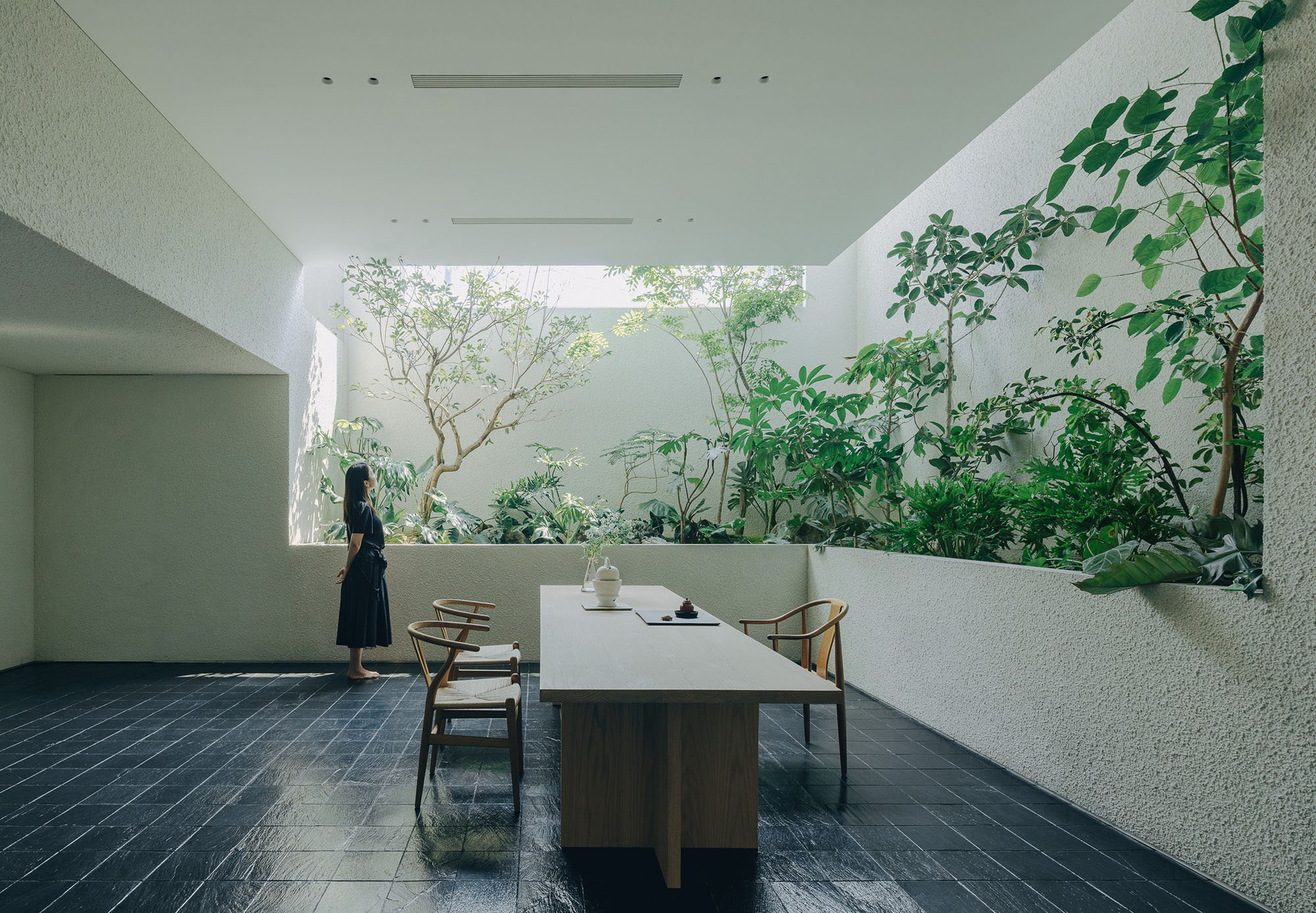
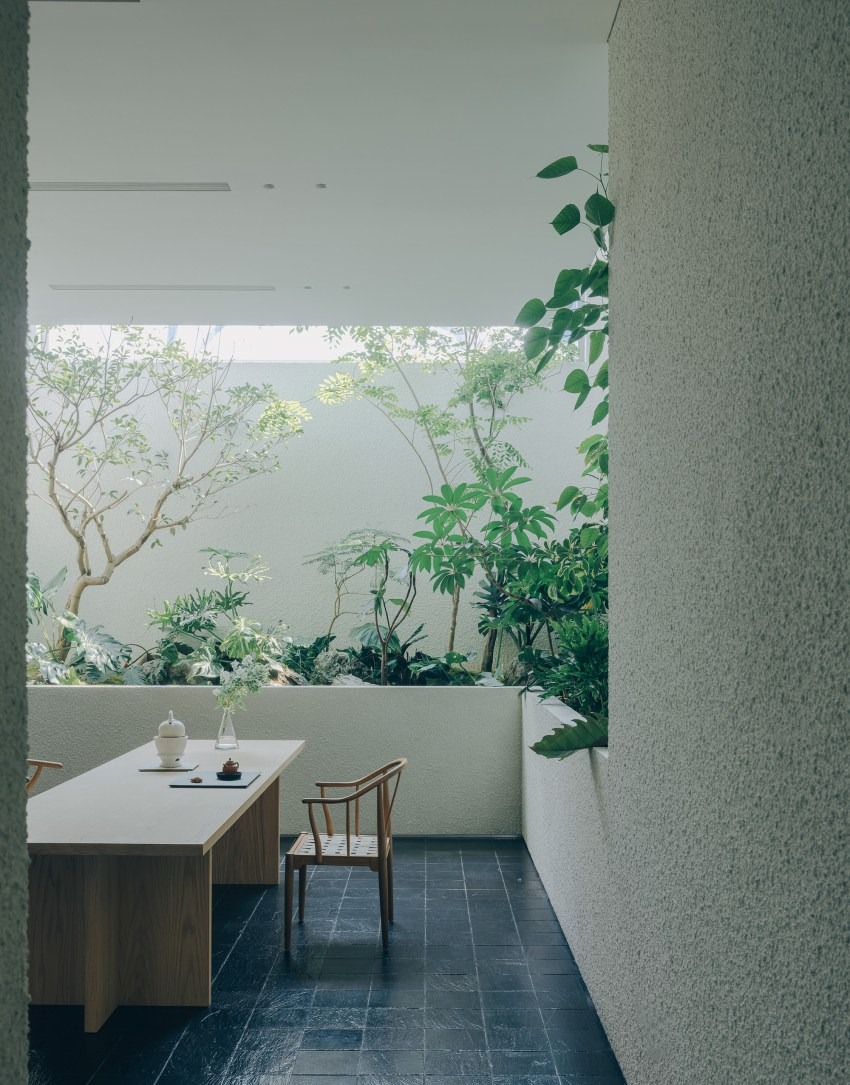
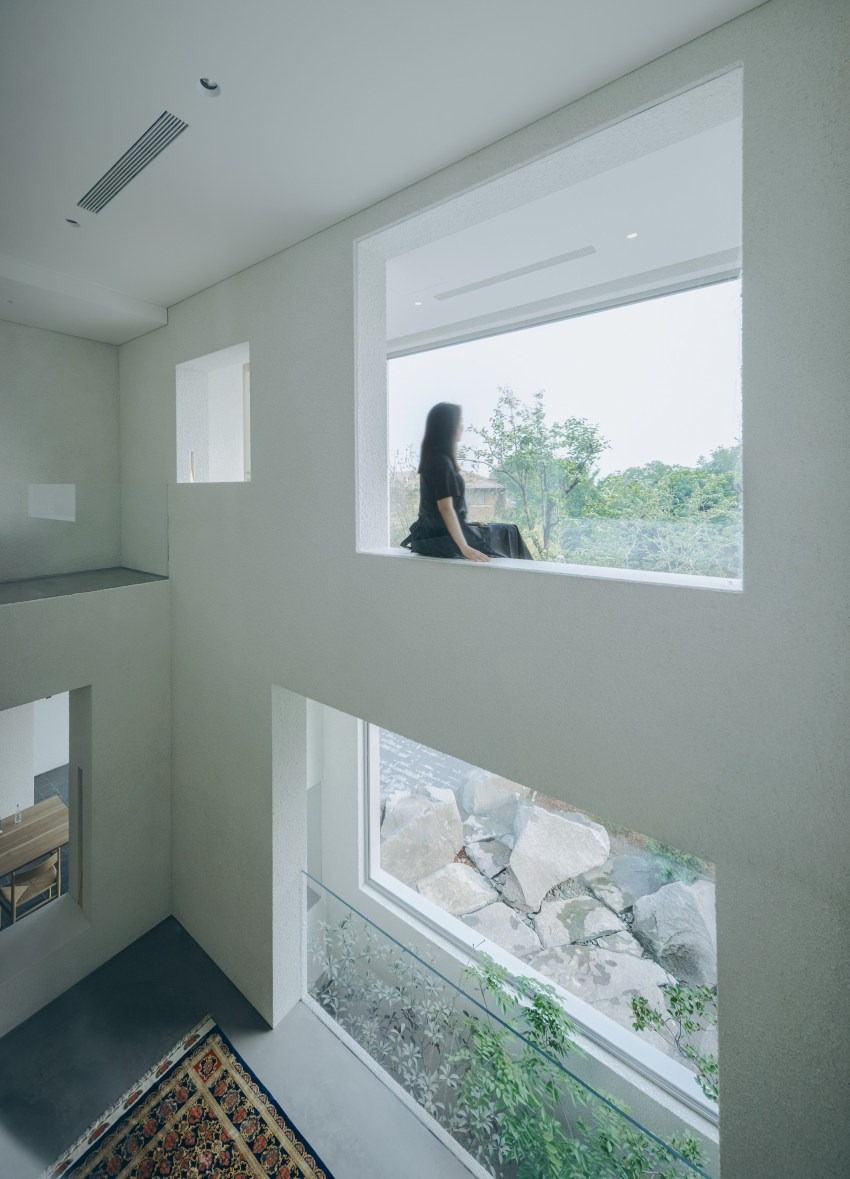
Beneath this suspended volume, the absence of columns forms a generous void that functions as an indoor garden, further blurring distinctions between structure and landscape. Over time, the intention is for surrounding trees to enfold the elevated space, rendering it a horticultural canopy suspended within the larger topography. This spatial synthesis draws not from mimicry but from mutual reciprocity: architecture makes space for vegetation, and vegetation, in turn, redefines the architectural boundary. The result is not a garden outside a building, but a structure composed of layered gardens.
Circulation and Intimacy: Atmospheric Rhythms of Threshold and View
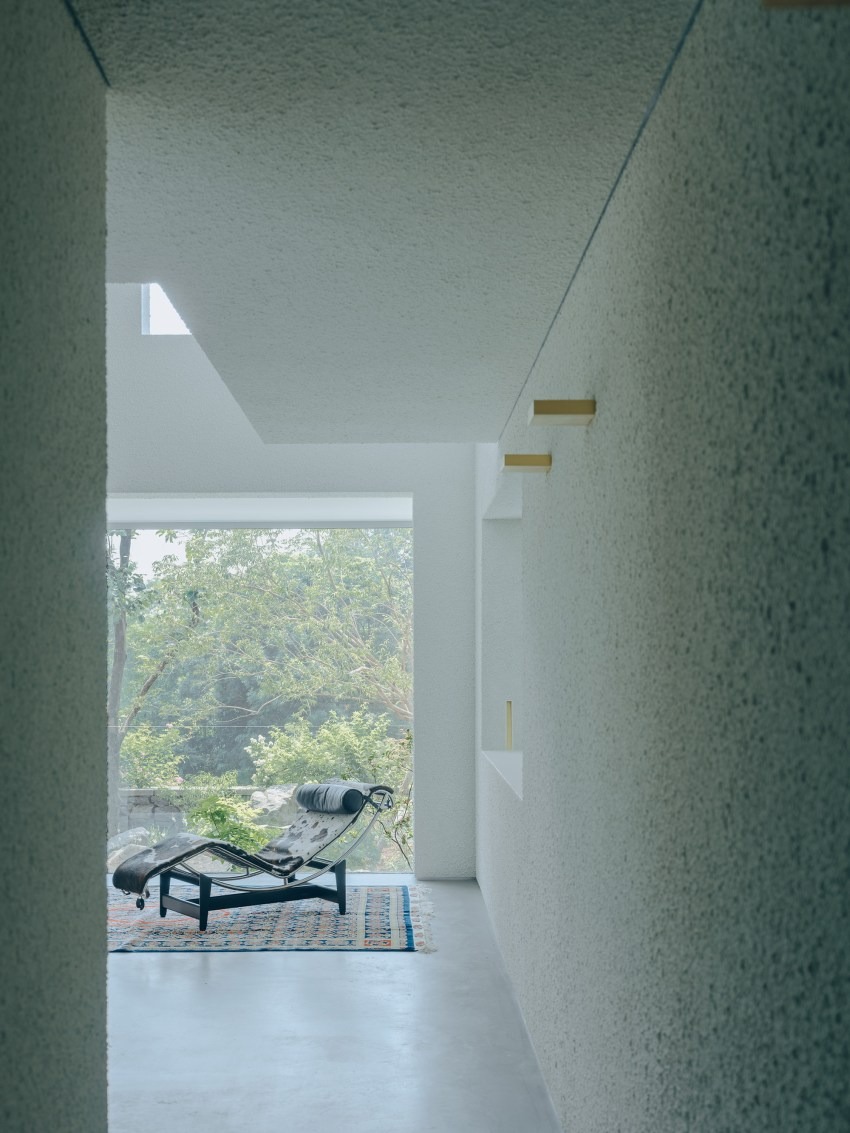
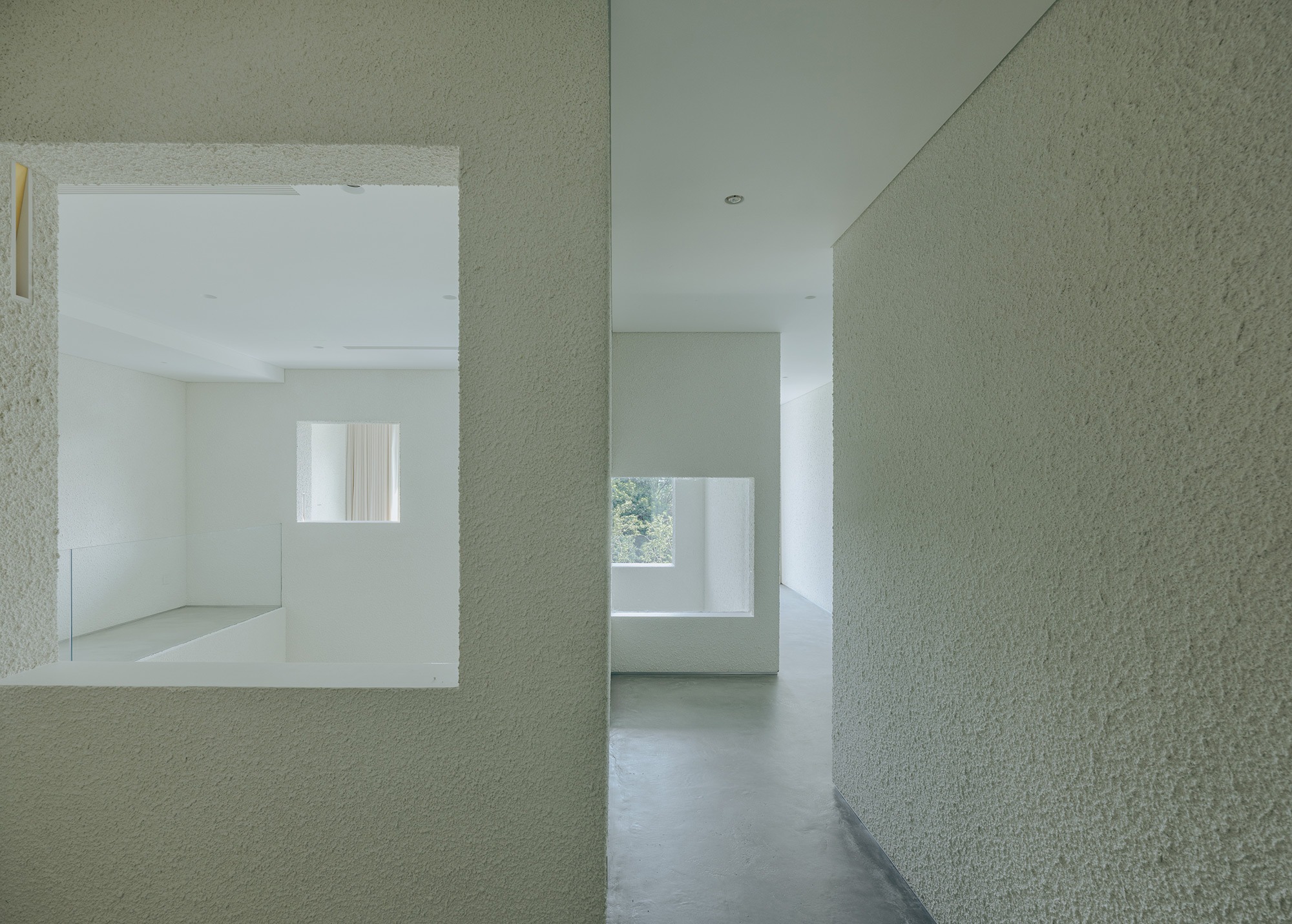
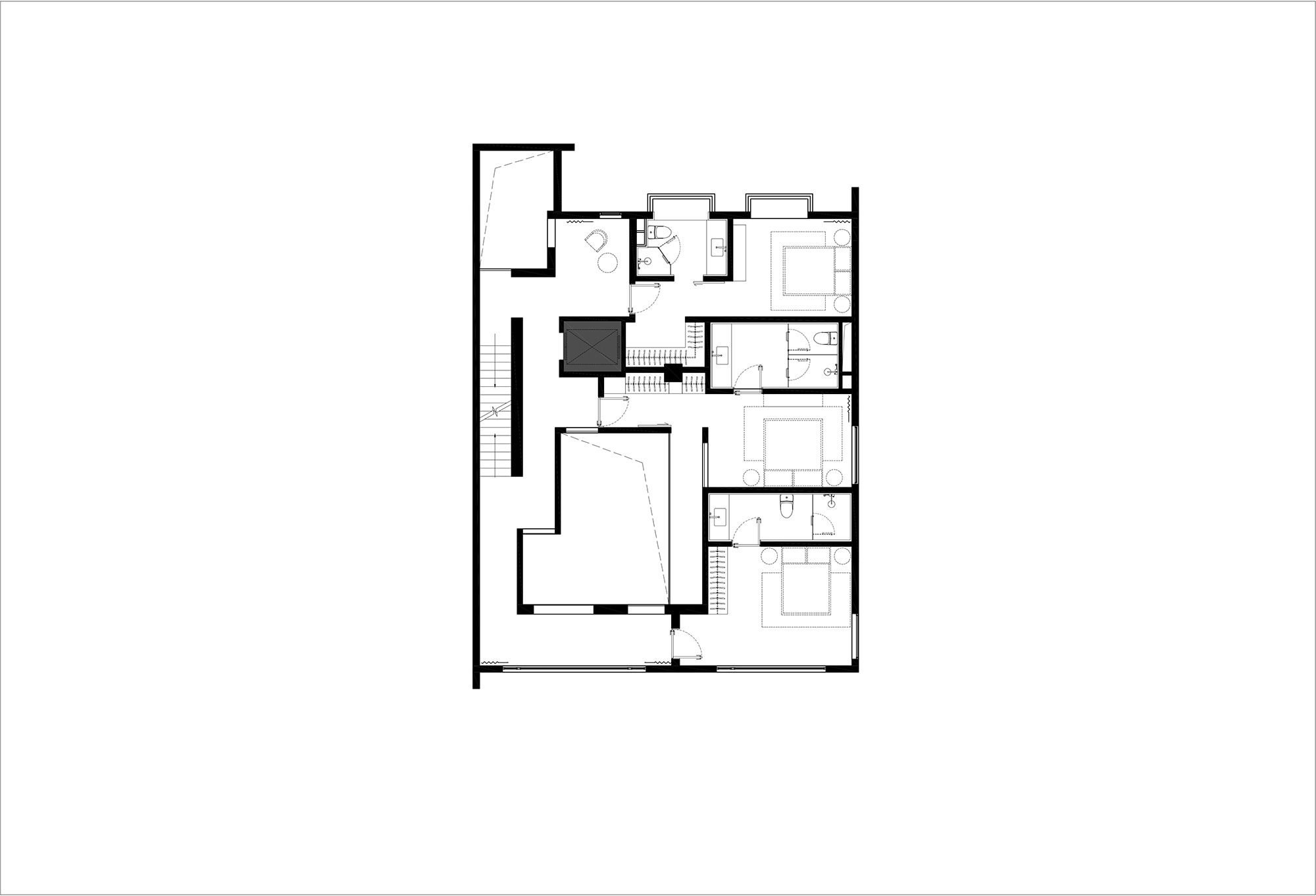
Movement through the house is conceived not as a linear pathway but as a series of atmospheric transitions. On the second level, a corridor loops around the floating living room, itself treated as a volumetric event within the circulation scheme. The varied floor levels and staggered perspectives ensure that the passage to each bedroom unfolds differently, alternately framed by interior gardens, partial views, and double-height voids. Changes in floor plate heights and suspended volumes shape both physical navigation and perceptual rhythm, producing an architecture of inhabitation rather than mere accommodation.
Movement through the house is conceived not as a linear pathway but as a series of atmospheric transitions. On the second level, a corridor loops around the floating living room, itself treated as a volumetric event within the circulation scheme. The varied floor levels and staggered perspectives ensure that the passage to each bedroom unfolds differently, alternately framed by interior gardens, partial views, and double-height voids. Changes in floor plate heights and suspended volumes shape both physical navigation and perceptual rhythm, producing an architecture of inhabitation rather than mere accommodation.
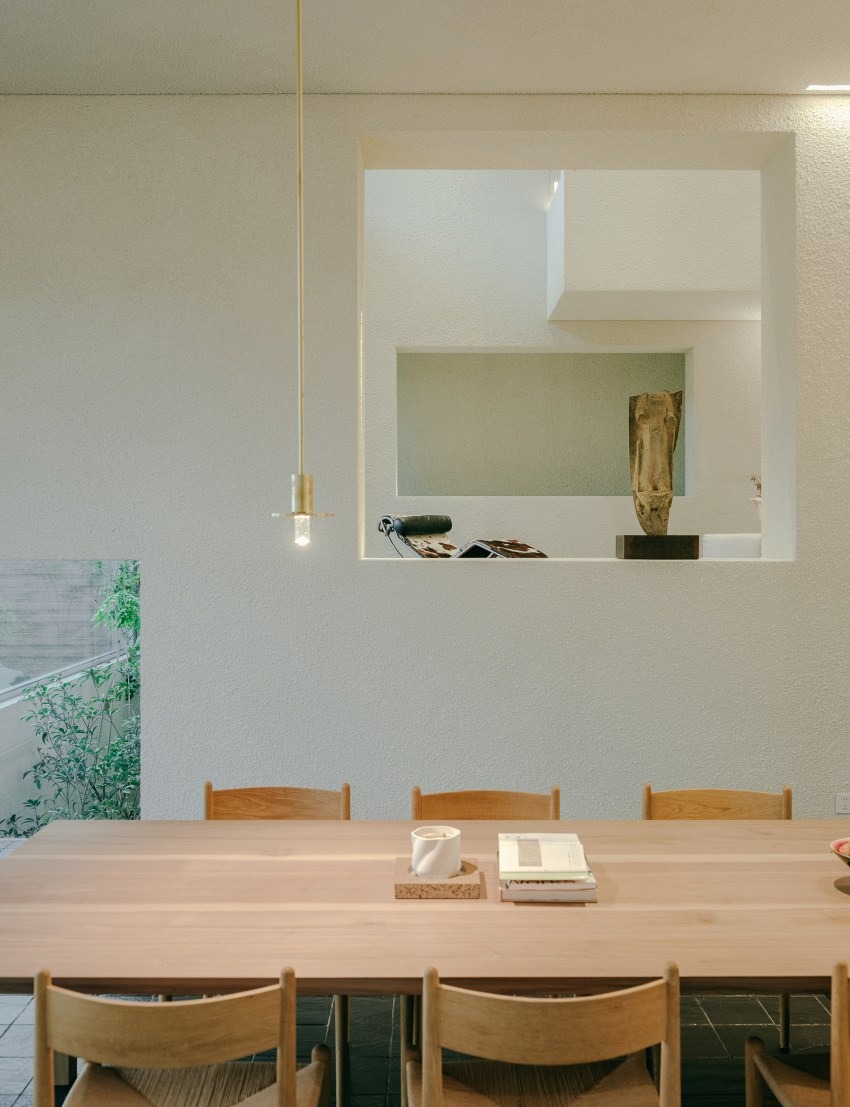
Rather than fixed walls, adjacency and visual permeability separate programmatic domains: the open kitchen, inward-facing yet connected to both garden and living room, enables visual communion without physical overlap. The differentiation of function follows not grids, but gradients of interaction. The coupling of voids and vegetation at key thresholds renders House J neither completely open nor closed, but in constant modulation, allowing users to drift between solitude, connection, and contemplation within an articulated spatial ecology.
Source: Atelier About Architecture
m i l i m e t d e s i g n – w h e r e t h e c o n v e r g e n c e o f u n i q u e c r e a t i v e s
m i l i m e t d e s i g n – w h e r e t h e c o n v e r g e n c e o f u n i q u e c r e a t i v e s


TYPE OF WORKS

Most Viewed Posts









Since 2009. Copyright © 2026 milimetdesign. All rights reserved. Contact: milimetdesign@milimet.com